








Running a startup in 2026 is more challenging than ever. Founders usually handle marketing, customer support, sales, and product development. They often do this with small teams and tight budgets. Many startups use AI tools to save time, automate tasks, and boost daily operations.
AI tools help many startups save time, cut costs, and boost team productivity. They achieve this without needing to hire large teams. This is true even for small teams with limited budgets. In this article, you’ll find the top 10 AI tools for startups in 2026. We’ll cover their features, pricing, benefits, and real-life use cases.
Why Startups Need AI Tools
Startups need AI tools for four main reasons:
Save Time: AI completes repetitive tasks quickly. It quickly drafts emails, enters data, summarizes meetings, and creates content. This allows founders and teams to focus on important business tasks.
Cut Costs: AI tools can take on many roles, reducing the need for traditional hiring. An AI writer can replace a content writer, copywriter, and blogger. As a result, this can noticeably reduce hiring costs.
Increased Productivity: AI tools can operate without interruption. They manage many tasks at once. This cuts down on human error and can greatly improve productivity.
Improve Decision-Making: AI analyzes data and provides actionable insights. AI helps predict customer behavior, understand market trends, and set pricing strategies. It uses data, not gut feelings.
For example, many startup founders use tools like ChatGPT and Canva AI. They’re quick and easy, needing no technical skills or big budgets.
Top 10 AI Tools for Startups
A SaaS startup can use ChatGPT to write onboarding emails. At the same time, Canva AI can make social media graphics in just minutes.
Here are some AI software for startups in 2026:
- ChatGPT: Content Creation and Research
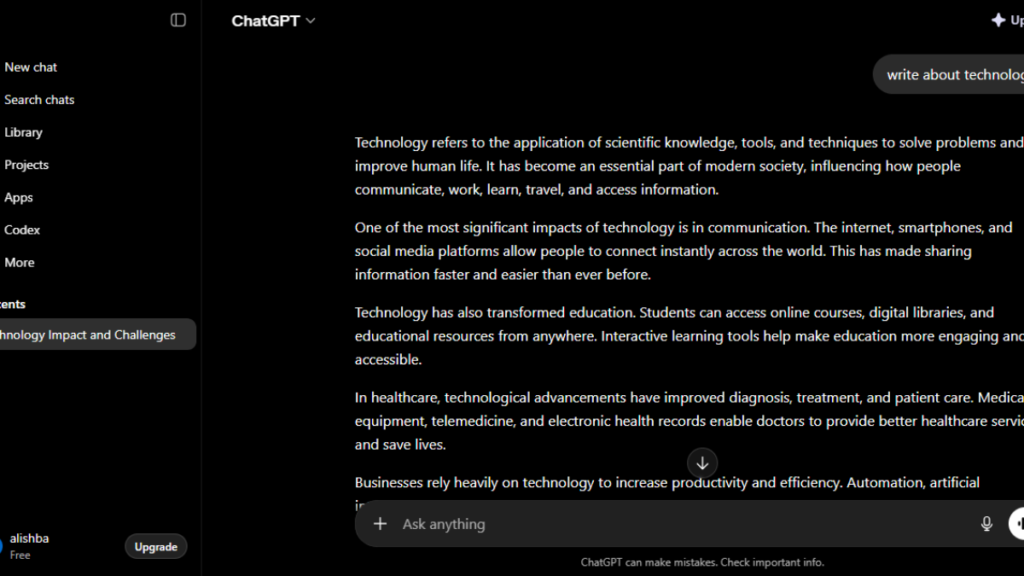
ChatGPT, created by OpenAI, is the leading AI chatbot. It understands and generates text that feels human-like.It is the best AI software for small businesses. McKinsey research shows that AI automation reduces repetitive tasks. This change boosts efficiency for businesses.
Key Features:
- Content creation
- Data analysis
- 24/7 availability
- Support for over 100 languages
- Reasoning for complex problem-solving
How Startups Can Use ChatGPT:
Founders use ChatGPT to brainstorm ideas. They also write investor emails and automate customer support tasks. ChatGPT is also useful for debugging code during product development. However, it helps research market trends and generating product descriptions. A SaaS startup can use ChatGPT to write onboarding emails for new users. This helps cut down on the workload for customer support.
- Canva AI: Graphic Design and Branding
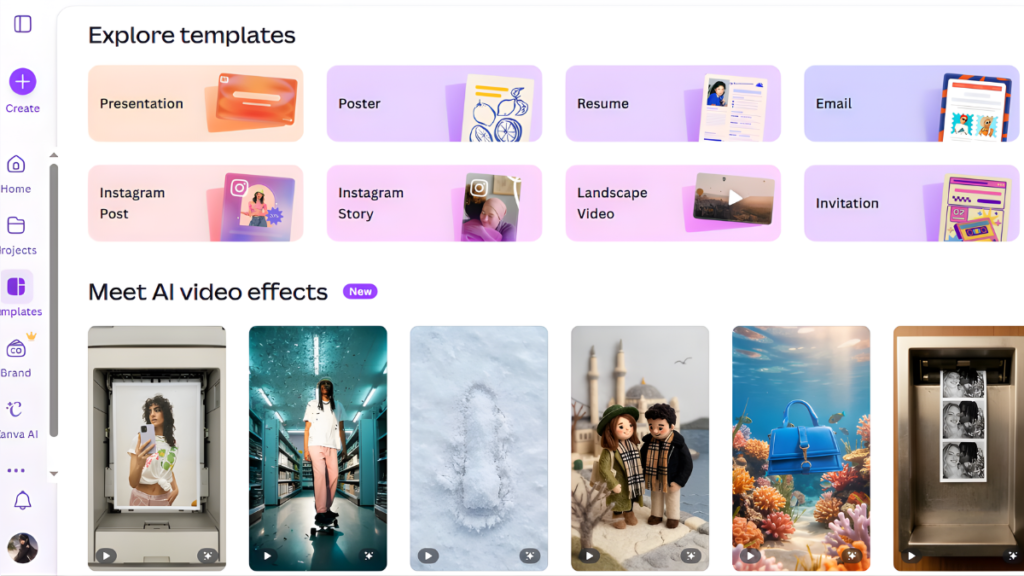
Canva AI merges the top design platform with smart AI tools. You can make professional graphics, presentations, social media posts, and marketing materials quickly. Additionally, you do not need any design skills. It is a startup automation tool.
Key Features:
- Magic Design: AI creates full designs from text prompts.
- AI Image Generation: Turn text into images.
- Automated Resizing: Adjust designs for various platforms.
- AI-Powered Photo Editing: Enhance photos with AI.
- Thousands of Templates: AI-optimized templates available.
How Startups Can Use Canva AI: Early-stage startups can use Canva’s AI templates. E-commerce startups create product mockups and ad creatives for Facebook and Google Ads. Founders also use it to design logos, business cards, and email newsletter headers.
- Notion AI: Productivity and Team Collaboration
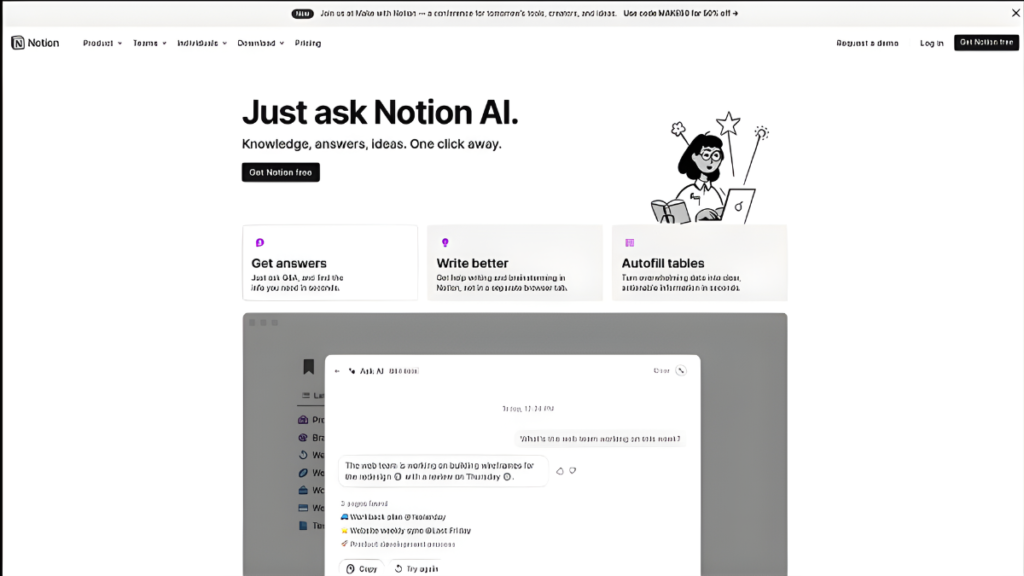
Notion AI adds artificial intelligence to Notion’s workspace. This transforms Notion from a simple note-taking app into an intelligent productivity workspace. It helps manage knowledge and boosts productivity. It automates documentation and content creation.
Key Features:
- Automatic summarization of meeting notes and long documents.
- Grammar and tone correction.
- Q&A from the company knowledge base.
- Automated task creation.
- Database filling.
How Startups Can Use Notion AI: Startups can use Notion AI to build company wikis. Teams summarize lengthy customer interviews and store insights in searchable databases. Project managers can create project plans and task lists directly from meeting notes. Remote teams create SOPs and organize internal processes more efficiently.
- Jasper AI: Marketing Content
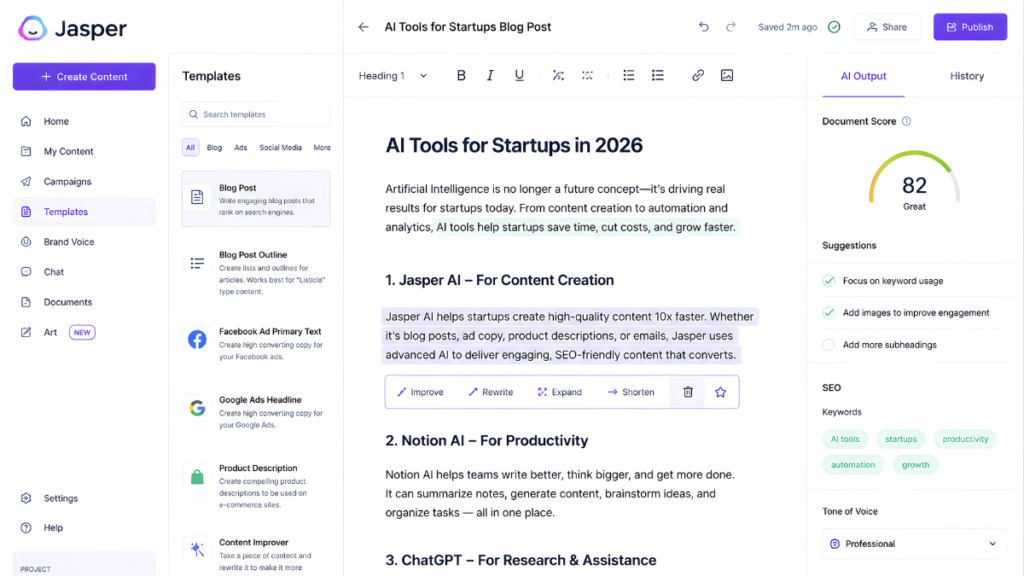
Jasper AI is a unique AI writing tool. It is designed for marketing teams and content creators. Jasper isn’t like regular chatbots. They’re trained on marketing best practices. Plus, it offers templates that boost conversion-focused content.
Key Features:
- 50+ templates for ads, emails, blogs, and social media
- SEO optimization tools
- Generate long-form content
- Refine and improve content
- Check for plagiarism
How Startups Can Use Jasper AI: Content marketers can create multiple blog posts each week. Growth teams create A/B test variations for landing page copy and email subject lines. E-commerce startups create product descriptions for hundreds of items in hours. Meanwhile, SaaS companies create email nurture sequences that convert free users into paying customers.
- Grammarly: Writing and Editing
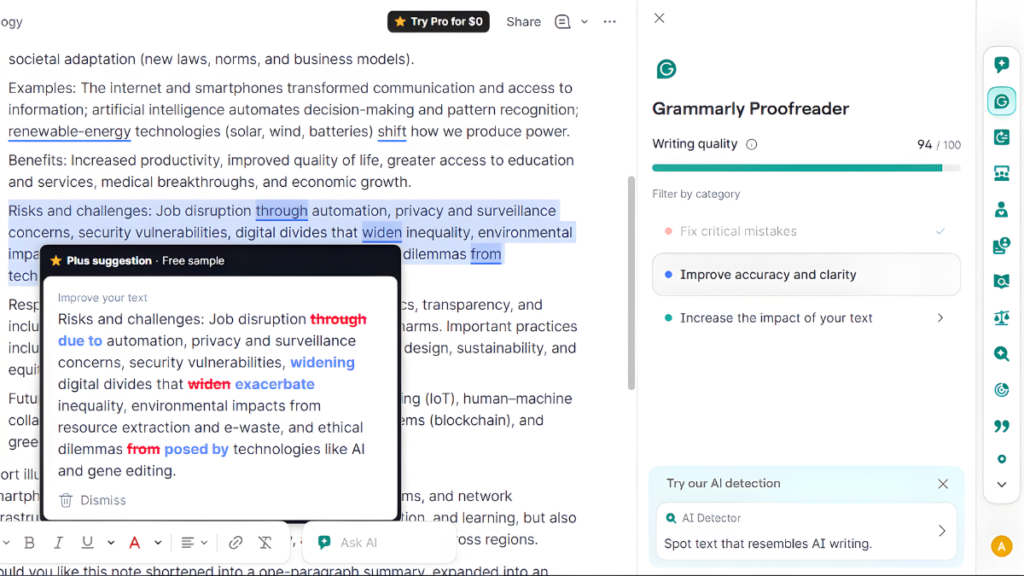
Grammarly is an AI writing helper. It checks grammar, spelling, punctuation, clarity, tone, and style as you write. It works on all platforms and browsers. This ensures that every message from your startup appears professional and polished.
Key Features:
- Real-time grammar and spelling correction
- Tone detection and adjustment
- Clarity suggestions
- Vocabulary enhancement
- Writing performance insights
How Startups Can Use Grammarly: Founders can create clear, error-free emails for investors. Customer support teams respond to tickets with professional, clear language that reduces misunderstandings. Furthermore, marketing teams polish blog posts and website copy before publishing.
- HubSpot AI: CRM and Sales Automation
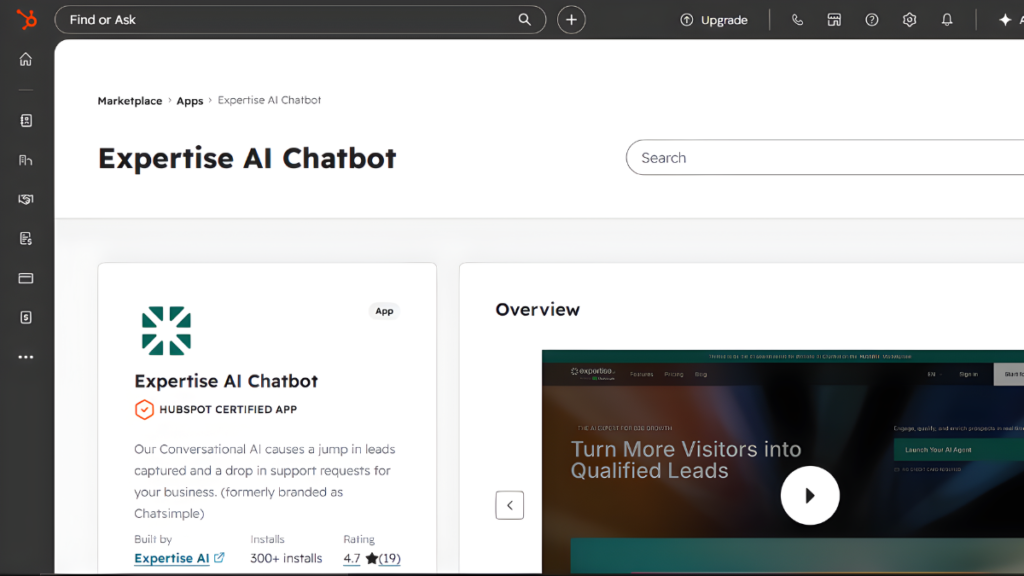
HubSpot AI brings artificial intelligence to HubSpot’s CRM and marketing platform. It provides AI insights. It automates tasks and creates content for sales, marketing, and customer service teams.
Key Features:
- AI-powered lead scoring
- Email subject line and body generation
- Predictive analytics for sales forecasting
- Chatbot creation
- Automated data entry
How Startups Can Use HubSpot AI: AI-powered lead scoring helps the sales team focus on high-value leads. Marketing automation sends personalized email sequences based on customer behavior without manual segmentation. Startups use AI-powered sales forecasts to make more precise predictions about monthly revenue.
- Zapier AI: Workflow Automation
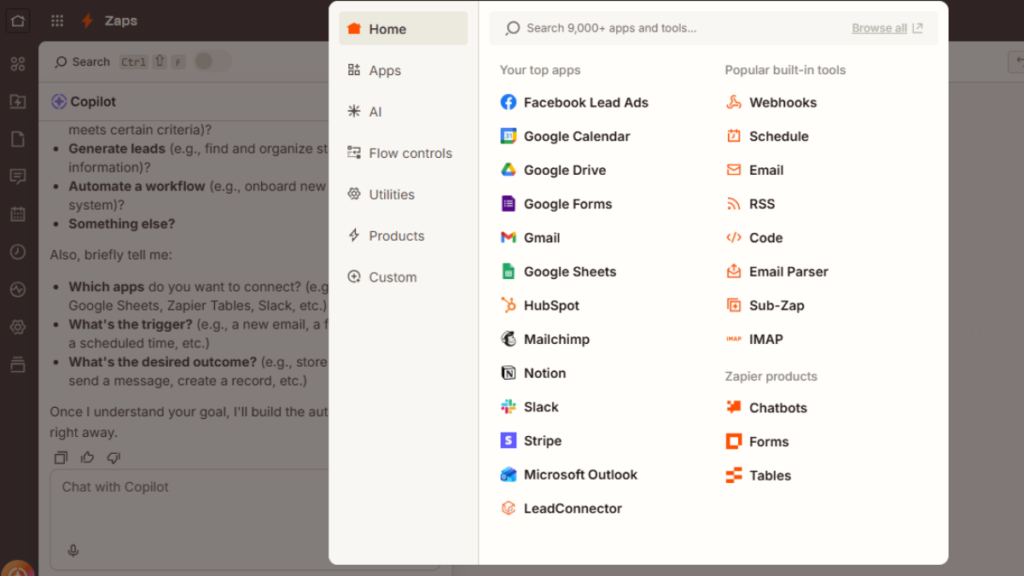
Zapier AI links more than 8,000 apps. It uses AI to create smart automated workflows, all without any coding. It’s the best tool for managing your startup’s tech stack. It also automates processes across different platforms.
Key Features:
- AI-powered workflow suggestions
- Natural language workflow creation (“Zaps”)
- Intelligent error handling
- AI content generation within workflows
- Real-time triggers across all connected apps
How Startups Can Use Zapier AI: Startups can capture website leads immediately inside their CRM. They can also send personalized welcome emails in minutes. Marketing teams post the same content to LinkedIn, Twitter, and Facebook at the same time. Operations teams sync customer data across all tools without manual entry.
- Copy.ai: Marketing and Sales Content Creation
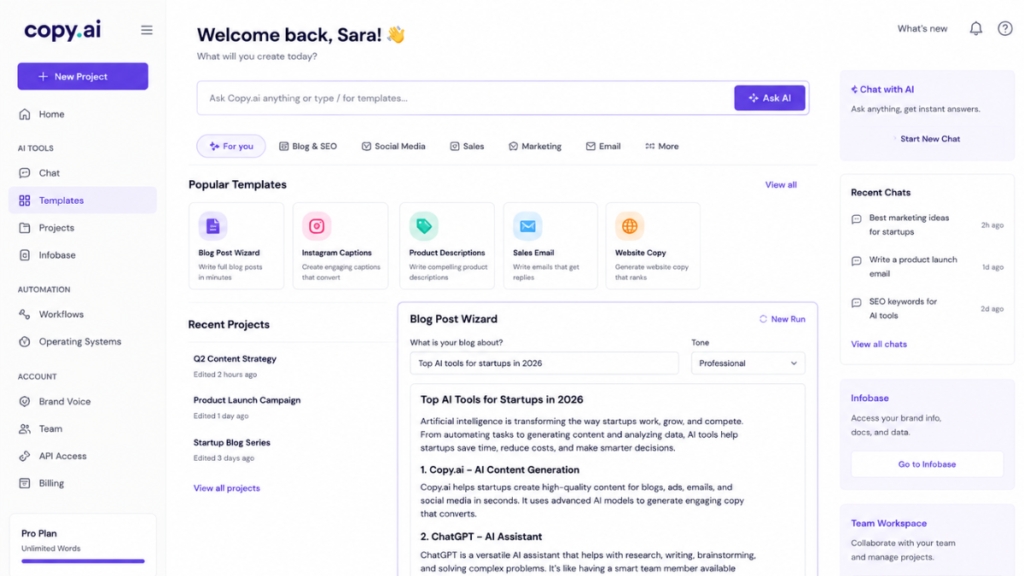
Copy.ai is an AI tool that helps create marketing and sales content fast. It has hundreds of templates for various uses. It aims to create copy that boosts conversions and delivers results.
Key Features:
- 90+ copywriting templates
- Chat-based content generation
- Bulk content creation
- Brand voice training
- Team collaboration
How Startups Can Use Copy.ai: Copy.ai works best for startups that publish content regularly. Advertising teams can now create first drafts of ad copy or email campaigns in minutes. This lets them spend more time on strategy and testing instead of writing for hours.
- Fireflies AI: Meeting Notes and Transcriptions
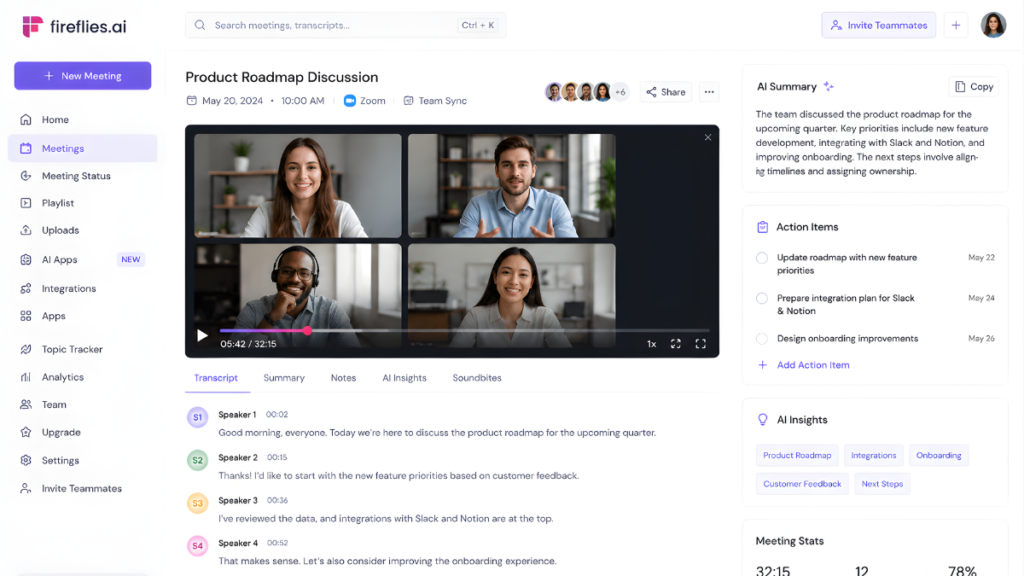
Fireflies AI is a smart meeting assistant. The tool records, transcribes, and analyzes conversations. In addition, it works with Zoom, Google Meet, Microsoft Teams, and other video platforms. It extracts action items, insights, and key information without human intervention.
Key Features:
- Automatic recording and transcription of meetings.
- AI-powered summaries for quick insights.
- Search through all meeting conversations easily.
- Sentiment analysis to gauge team mood.
- Integration with CRM and project management tools.
How Startups Can Use Fireflies AI: Founders talk to customers. This helps in product development. Sales teams review call recordings to improve pitch scripts and closing techniques. Remote teams can instantly share meeting summaries with absent members.
- Perplexity AI: Research and Information Gathering
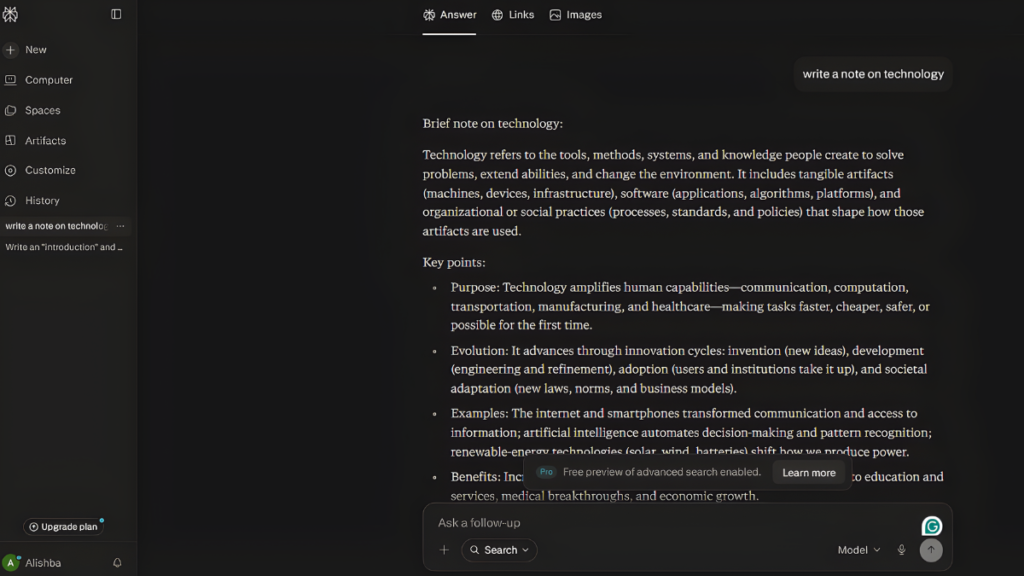
Perplexity AI is an AI search engine. The tool gives accurate answers to complex questions and cites its sources. It combines information from different sources. AI gives clear answers with source citations for you to check.
Key Features:
- Cite sources for all answers
- Focused search modes: writing, academic, general
- File upload and analysis
- Deep research mode for detailed reports
- Real-time information access
How Startups Can Use Perplexity AI: Founders can quickly research new markets. They gather competitor pricing, customer demographics, and market size data in minutes. Product teams analyze industry trends to decide which features to build next. Marketing teams fact-check all statistics and claims before publishing content.
Comparison Table of AI Tools for Startups
| Tool | Best For | Free Plan | Paid Plan |
| ChatGPT | General productivity and content | Yes | $20/month |
| Canva AI | Visual design | Yes | Starts at around $15/month |
| Jasper AI | Marketing copy | No | $39/month |
| Notion AI | Documentation and collaboration | Yes | $10/month |
| Grammarly | Writing improvement | Yes | $12/month |
| HubSpot AI | CRM, sales, marketing | Yes (CRM) | $20/month+ |
| Zapier AI | Automation | Yes (limited) | $19.99/month |
| Copy.ai | Short-form content | Yes | $49/month |
| Fireflies AI | Meeting notes | Yes | $10/month |
| Perplexity AI | Research, insights | Yes (limited) | $20/month |
Pricing alone shouldn’t determine which AI tool you choose. Some free tools work well for small teams. However, others are helpful once a startup starts to grow.
Most early-stage startups find that ChatGPT, Canva AI, and Notion AI are enough. These tools cover content creation, design, and team collaboration. This way, they avoid heavy software costs.
Note: Pricing and features may change over time. Please visit the official website of each tool for the latest plans and updates.
How to Choose the Right AI Tool
Follow these steps to choose the right AI tool:
Identify Your Startup’s Needs: First, find out what you require most. Is it content writing, design, customer support, automation, or data analysis? Every tool is designed for a specific purpose.
Consider Your Budget: Startups have limited budgets. Look for free tiers and startup pricing. Some providers give credits to Y Combinator or Techstars alumni. Calculate long-term ROI.
Test Free Versions: The majority of tools provide freemium plans or free trials. Try the free version first to test it, because if the tool saves you time, then think about the subscription plan.
Check Integration Options: Your current tech stack should work with the tool. Steer clear of techniques that isolate data. But make sure native integrations and Zapier maintain efficient workflows.
For early-stage startups, using too many AI tools can confuse workflows. Most founders gain more by mastering 2–3 key tools first. Then they can expand their stack.
Pros and Cons of AI Tools for Startups
Pros
- Saves operational costs
- Increases productivity
- Improves customer experience
- Scaling business operations
- Helps small teams perform like larger organizations
Cons
- Subscription costs can add up
- AI-generated content may require editing
- Data privacy concerns
- Team training may be required
Conclusion
ChatGPT, Canva AI, Notion AI, HubSpot AI, and Zapier AI are helping startups perform daily tasks better. They handle everything from content creation to workflow automation. This allows small teams to handle more work without hiring large teams. Furthermore, every startup faces unique challenges. So, there isn’t one AI tool that works for all businesses. In most cases, successful founders usually start with one or two tools. These tools help them solve their biggest problems. Then, they expand their AI toolkit as their business grows.
AI tools are no longer just optional productivity apps. For many startups, they have become a practical part of everyday business operations. Overall, AI doesn’t replace people. It helps teams save time, cut down on repetitive tasks, and focus on growth. The best approach is to start with a few tools that solve real business problems. As the startup grows, founders can expand their AI stack. In fact, they can base this on their workflow, goals, and budget. This approach lets them avoid chasing every new trend.
FAQs
Are AI tools worth it for small businesses?
Yes, absolutely worth it. AI tools also save time, reduce costs, and increase productivity. Small businesses can compete with larger ones. AI provides them with enterprise-level tools, even with fewer resources.
Can startups use AI tools for free?
Yes, most AI tools offer free plans. ChatGPT, Canva AI, Grammarly, and Notion AI offer free versions. So do HubSpot CRM, Copy.ai, Fireflies AI, and Perplexity AI. Zapier has a limited free option as well. These tools are great for early-stage startups.
Which AI tool is best for marketing?
For marketing, Jasper AI is the best because it’s specifically trained for marketing copy. Copy.ai is great for short content. HubSpot AI offers full marketing automation and integrates with CRM.