






Technology in Business 2026: Benefits, Types, Examples, and Future Trends

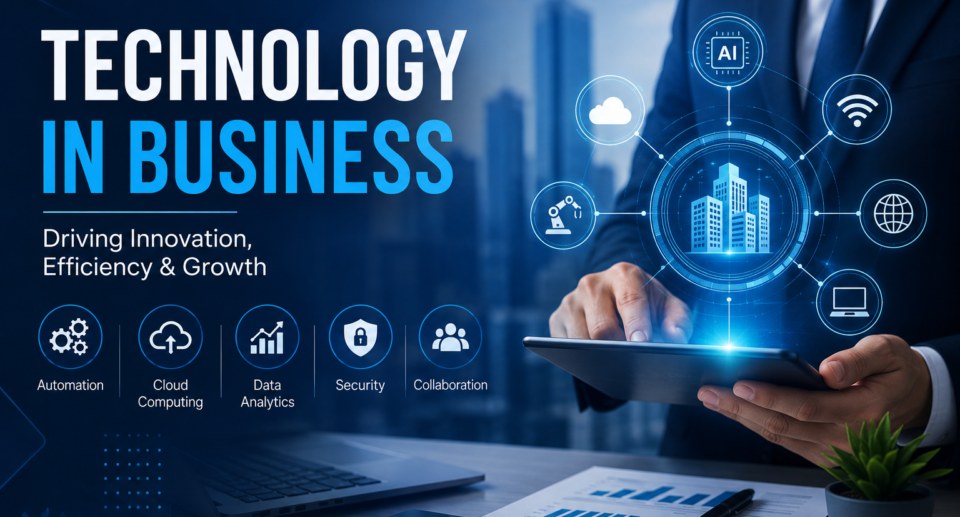
Technology has transformed the way businesses operate in the modern economy. Companies use digital tools like AI automation, cloud computing, and data analytics. These help boost productivity, cut costs, and enhance customer experiences. According to McKinsey, AI is expected to automate 30% of repetitive tasks in multiple industries. These technologies automate routine tasks and help businesses make faster decisions.
In today’s digital economy, firms that use the right technology can gain a competitive edge. They can make faster decisions and improve productivity. Business technology includes basic office software, communication tools, advanced AI systems, and cloud-based platforms. This article explains the role of technology in business and why it matters today. It highlights key benefits, common types, real-world applications, future trends, and challenges associated with digital transformation.
For example, companies like Amazon use AI and data analytics. They personalize customer recommendations and enhance shopping experiences.
What Is Technology in Business?
Business technology includes digital tools and systems. These technologies enhance decision-making, streamline operations, strengthen communication, and improve customer experiences. Businesses operate AI tools to automate repetitive tasks, reduce costs, and support long-term growth.
This includes:
- Hardware: servers, computers, and mobile devices
- Software: enterprise resource planning and customer relationship management systems
- Networking: internet, intranets, and cloud services
- Data platforms: databases and analytics engines
Modern business technology includes emerging technologies such as AI, blockchain, and IoT devices. These offer fresh capabilities and data sources.
Why Technology Matters in Business
Businesses adopt technology for many reasons. They aim to streamline processes, reduce manual labor, enhance accuracy, and increase speed. Technology automates tasks such as invoicing, payroll, and inventory tracking. For example, many retail businesses use automated inventory systems. These systems track stock levels in real time. This helps avoid shortages. Analytics helps organizations make data-driven decisions. Communication platforms boost teamwork, even when team members are in different places. Additionally, digital technologies enable new business models. These include subscription services, platform marketplaces, and digital-first customer experiences.
Such startup models were not possible before the Internet era. In modern organizations, technology goes beyond operations and plays a strategic role. Business leaders use digital tools to differentiate themselves and expand into new markets. As a result, companies can scale operations without significantly increasing staff.
Key Benefits of Technology in Business
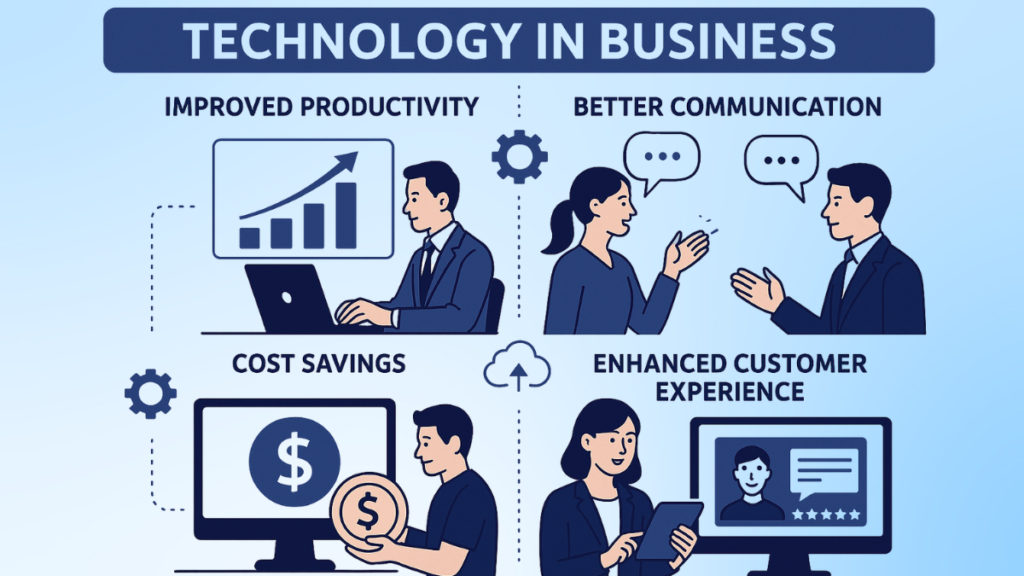
Improved Productivity
Technology in business automates routine tasks. This speeds up workflows and lets employees focus on more valuable tasks. Automation tools, such as robotic process automation (RPA), workflow management systems, and productivity suites, reduce manual errors. They also cut processing times. As a result, employees can complete tasks more efficiently and focus on higher-value work. It also helps companies grow without needing to hire as many employees.
Better Communication
Modern tools such as video calls and instant messaging make communication faster and clearer. Teams can share updates in real time. They can also collaborate on documents together and stay in touch across time zones. Clear communication reduces project delays, enhances alignment, and facilitates remote and hybrid work.
Cost Savings
Technology enables organizations to reduce operational costs through automation and smarter resource management. Cloud computing reduces large infrastructure investments. Instead, it turns those costs into more manageable operational expenses. Predictive maintenance with IoT sensors can cut costly downtime in manufacturing. Additionally, digital marketing offers more targeted and measurable campaigns compared to traditional methods.
Enhanced Customer Experience
Chatbots, e-commerce sites, recommendation engines, and mobile apps enable startups to offer faster and more personalized experiences for their customers. Data analytics enable segmentation and personalization, improving customer retention and lifetime value. Faster response times and self-service options also enhance customer satisfaction.
The following table shows how technology benefits businesses:
| Technology | Purpose | Business Benefits |
| AI | Automation & Analysis | Faster Decisions |
| CRM | Customer Management | Higher Retention |
| Cloud Computing | Remote Access | Low Costs |
| Cybersecurity | Data Protection | Risk Reduction |
| Analytics | Data Insights | Better Strategy |
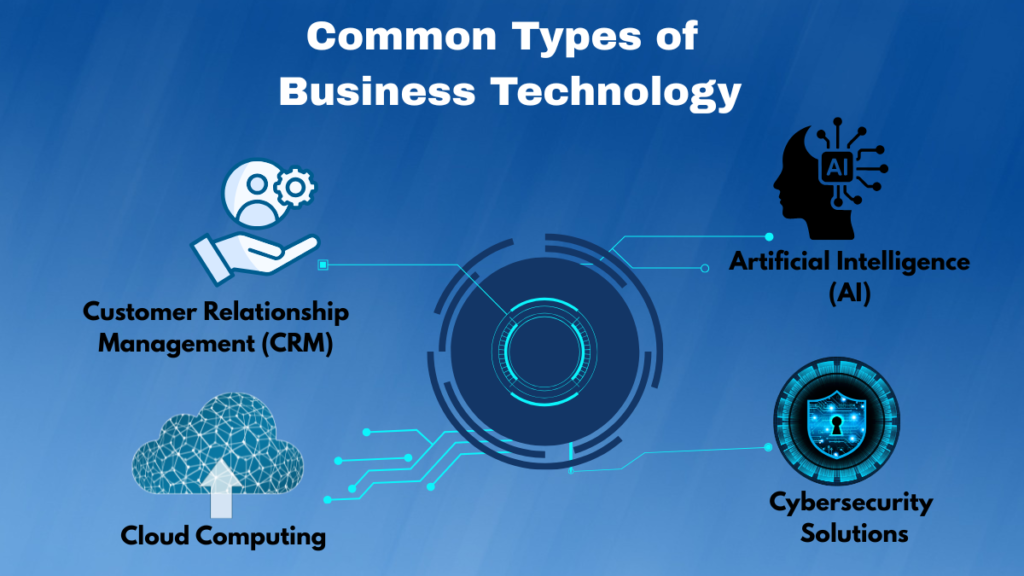
Common Types of Business Technology
Cloud Computing
Cloud computing provides on-demand access to computing resources. This includes servers, storage, databases, networking, and software. These services use the internet. Cloud services reduce the need for large upfront investments. They also ensure high availability and remote network infrastructure accessibility.
- Hosting websites
- Storing backups
- Running enterprise applications
- Enabling collaboration through cloud tools
Cloud computing has become a standard business technology. Many organizations now use cloud-based services. This helps them scale more efficiently, reduce infrastructure costs, and support remote work.
Artificial Intelligence (AI)
AI and machine learning analyze large datasets. They find patterns, make predictions, and automate difficult tasks.
AI is widely used in several business areas, including:
- Recommendation systems
- Demand forecasting
- Fraud detection
- Natural language processing (chatbots and virtual assistants)
- Computer vision for quality control
AI enables companies to gain valuable insights from data and craft personalized customer experiences. IBM reports that over 40% of businesses globally use AI in their operations. They also make decisions much more quickly than those relying solely on manual methods.
Customer Relationship Management (CRM)
Popular CRM platforms include Salesforce, HubSpot CRM, and Zoho CRM. These solutions enable organizations to manage customer relationships, automate sales processes, and boost customer retention. These platforms collect customer data, including contact information, purchase history, and interactions. They also offer tools for sales automation, marketing campaigns, and tracking customer service.
CRM systems enable businesses to maintain communication, manage leads, analyze customer behavior, and improve customer retention.
Cybersecurity Solutions
As digital operations expand, cybersecurity tools protect data, networks, and systems from threats.
Solutions include:
- Firewalls
- Intrusion Detection Systems
- Endpoint Security
- Encryption
- Identity and access management
- Security information and event management (SIEM)
Cybersecurity is key. It helps prevent data breaches, meet regulations, and keep customer trust. IBM reports that the average global cost of a data breach exceeds $4 million.
Real-World Applications of Technology in Business
Marketing and Sales
Technology transforms marketing with data-driven advertising, marketing automation platforms, and analytics. E-commerce platforms and payment gateways enable direct-to-consumer sales. A retail brand can run targeted social media ads. Then, it can use a CRM system to track customer journeys. In B2B, sales teams use CRM and sales tools. They prioritize high-value leads and automate outreach.
Customer Service
Chatbots, AI-powered help desks, and support platforms collaborate to enhance customer service. They expedite resolutions and offer assistance anytime, day or night. In telecom and banking, automated virtual assistants manage simple questions. Meanwhile, human agents tackle the more complex issues. Airlines use mobile apps and automated alerts to keep customers informed. These systems quickly notify customers about delays or schedule changes.
Operations Management
Manufacturers use IoT sensors and predictive analytics. They monitor machine health, cut downtime, and improve supply chains. Inventory management systems synchronize stock levels across locations, preventing overstocking or stockouts. Logistics companies use route optimization software. This helps them save fuel and speed up delivery times.
Remote Work and Collaboration
Collaboration tools help remote teams work flexibly. Video calls, cloud storage, and project management apps are key resources. Professional services firms use shared document systems and virtual whiteboards for client work. During the pandemic, many organizations quickly adopted remote work tools. Hybrid models still depend on these technologies to stay productive.
Practical examples include:
- Healthcare: Telemedicine platforms connect patients with doctors online and manage electronic health records.
- Finance: Banks use AI to detect suspicious transactions in real time.
- Retail: Retailers use omnichannel platforms to synchronize inventory across online and physical stores.
Customers can check product availability in real time, creating a smoother shopping experience.
Future Trends in Business Technology
AI and automation continue to attract significant business investment. Google and Microsoft are investing heavily in automation and AI solutions. Executives expect AI to play a bigger role in several areas. Surveys indicate that AI adoption will continue to grow in customer service, content creation, data analysis, and operational efficiency.
The future of business technology will focus on:
- Artificial intelligence
- Automation
- Advanced data analytics
- Remote work solutions
These areas will shape how companies operate.
Intelligent automation simplifies complex workflows. This lets employees focus on strategic tasks instead of repetitive ones. Real-time data analytics and edge computing will offer faster insights. Modern business technologies help organizations make faster and more accurate decisions. Hybrid and remote work models will continue to grow. This will increase the demand for collaboration tools, secure remote access, and employee experience platforms.
Emerging technologies such as virtual reality (VR) and augmented reality (AR) aid training and provide remote support. As technology evolves, businesses must try to balance innovation with cybersecurity, privacy, and ethics. This balance is key to sustainable growth.
Challenges of Technology Adoption
Adopting new technologies brings real benefits but also notable challenges. Cybersecurity risks grow as the attack surface widens. Strong cybersecurity measures are vital. Recent ransomware attacks on big companies show this clearly. This exposes organizations to ransomware, data breaches, and supply chain attacks. To combat these threats, strong security practices are essential. Continuous monitoring and a solid incident response plan are also crucial.
Successful technology adoption also depends on employee training and the effective use of tools. So, businesses should invest in:
- Employee training
- Change management
- User-centered design
This ensures successful adoption and helps avoid productivity drops during transitions. Cloud and SaaS lower upfront costs. However, businesses still require funding for integration, customization, and ongoing maintenance. Small firms should focus on investments with clear ROI. They could also consider phased rollouts or managed services. This way, they can keep costs in check.
Conclusion
Today, technology helps businesses work faster, reduce costs, and stay ahead of competitors. It also opens doors for innovation and growth. The right mix of business technologies helps organizations improve efficiency and adapt quickly to market changes. This includes cloud computing, AI, CRM systems, and cybersecurity.
Future trends such as AI, automation, and real-time analytics will continue to reshape business competition. Long-term success requires careful planning and strategic investment. It also requires investing in employee training. Strong governance also helps organizations manage risks effectively. Investing in the right technologies helps businesses stay competitive as digital transformation continues. Early adopters of digital transformation adapt quickly to customer needs and market changes.
FAQs
In what ways does technology enhance business decision-making?
Businesses can quickly gather and verify data through technology advancements. This capability helps managers see market trends. They can make better decisions and improve responsiveness to customer needs.
Why is technology important for businesses?
Technology boosts efficiency, enables data-driven decision-making, reduces costs, and improves customer experiences. It also supports new business models that drive growth.
How does technology improve productivity?
Businesses use technology to save time by automating repetitive tasks and reducing manual errors. It speeds up communication and offers tools for collaboration and access to information. This helps employees focus on more important work.
In what ways does technology enhance the consumer experience?
Technology enhances the customer experience through quicker communication, tailored suggestions, and online help. Mobile-friendly services further improve these interactions by making them more convenient.
Why do companies spend money on cloud computing?
Businesses invest in cloud computing because it lowers costs. It enhances scalability, supports remote work, and allows secure data access from anywhere.