


AI in E-Commerce 2026: Trends, Benefits, and Real-World Applications

Online shopping in 2026 looks very different from what it did a few years ago. Retailers are no longer relying only on product catalogs and discount campaigns. AI helps startups understand what customers enjoy. It can predict their buying habits and create personalized shopping experiences.
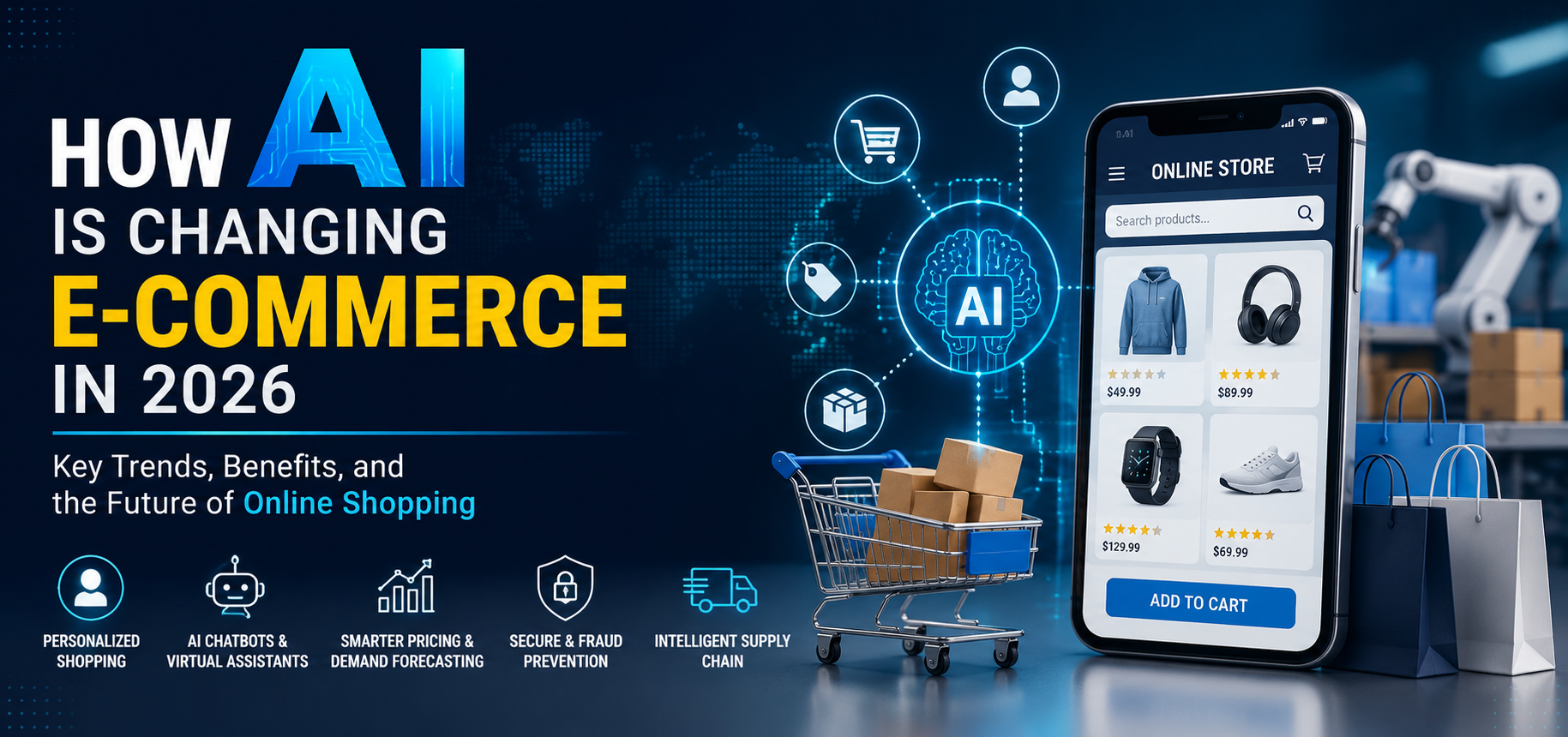
Online shoppers now expect faster, more convenient, and highly tailored experiences. They are utilizing AI in e-commerce to stay competitive and boost benefits. This article examines how AI is changing online shopping in 2026. It covers customized customer experiences, smarter search tools, and AI-powered virtual assistants. We’ll discuss supply chain optimization, dynamic pricing, suitable security, and the latest trends in e-commerce.
How AI Is Transforming E-Commerce in 2026
AI is becoming popular in traditional retail. This rise is related to improved algorithms, cheaper computing, and larger information structures. Retail stores use machine learning to analyze shopper behavior patterns. They can predict demand patterns and automate repetitive operational tasks. Customer expectations are higher than ever. Customers expect quick responses, specific product recommendations, and simple installment strategies.
Conventional frameworks often struggle to meet these expectations. E-commerce business automation tools use AI to boost efficiency in a competitive market. As a result, customers enjoy faster, more relevant, and more specific buying services. If they don’t, they may lose market share to data-driven competitors. This helps retailers pick better inventory, run ads on time, and tailor shopping for customers. Retailers that don’t use AI tools will find it challenging to keep up. They struggle with speed, personalization, and efficiency compared to data-driven competitors. It’s essential for providing a modern customer experience and remaining profitable.
AI-Powered Personalization in E-Commerce
Personalized product recommendations are now a top use of AI in e-commerce. They create unique experiences that boost conversion rates and average order value. Machine learning models use browsing history, past purchases, and time-of-day patterns. They also consider external signals, such as weather and local events. This helps them suggest the best products for you. Customers experience more than standard emails. They see dynamic homepages, customized search results, and promotional offers.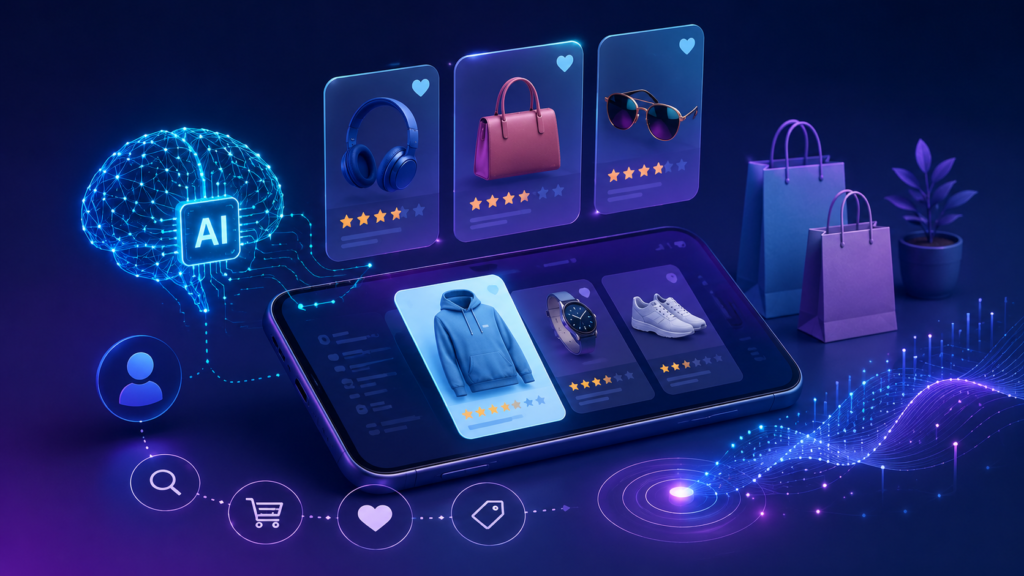
Customer behavior analysis enables retailers to break down users into smaller, more targeted groups. This way, they can offer exclusive content or discounts. Automated systems can create relevant offers and promotions. They time them for maximum impact, which cuts ads and boosts loyalty. Shopping gets easier: returning visitors see accessories that match their last purchase. First-time shoppers can find curated starter kits.
Amazon has always used recommendation engines. These engines suggest products based on your browsing and purchasing history. Smaller online stores can now use similar personalization techniques. Reasonable AI-powered commerce systems make this possible. They consider the features of the products. This helps recommend products customers may not have discovered on their own. In 2026, smaller e-commerce stores can use AI-powered recommendation tools. They can access these tools through plug-ins and cloud services. This makes hyper-personalization accessible to more retailers.
A famous example is Amazon’s AI technology. It uses AI-driven recommendation systems. These systems analyze browsing behavior, purchase history, and customer preferences. These tips help shoppers find products they want. They also boost sales for the retailer.
AI-Powered Search in E-Commerce
Better search is essential as catalogs grow. AI search engines understand what you mean, correct mistakes, and rank results based on relevance and personalization. Natural language processing lets shoppers type questions like “waterproof hiking boots under $120.” They receive quick and accurate results right away.
Voice search is growing in popularity on mobile devices and smart speakers. It allows customers to ask questions in a way that feels comfortable. AI understands what you say and finds items in a catalog. This makes shopping without using your hands easy. Visual search technology changes how we discover products. Users can upload photos or screenshots. Image recognition finds similar items or exact matches in a retailer’s stock.
These technologies help match products better. This way, customers can find what they want without delay. As a result, bounce rates drop and conversions rise. AI in e-commerce makes discovery easy. Shoppers spend less time searching and more time buying. Individualized recommendation systems help shoppers find products that match their tastes. They use browsing habits to suggest items that fit well. This is exactly how AI is reshaping online shopping in 2026.
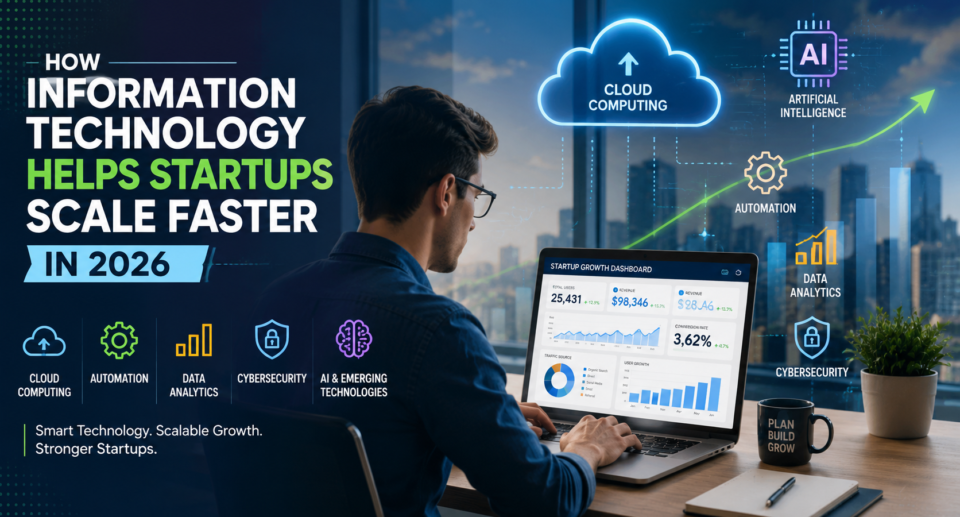
Also Read This Article: How Information Technology Helps Startups Scale Faster in 2026
AI in E-Commerce Security
AI improves fake identification through pattern recognition and anomaly detection methods. Machine learning models can quickly detect suspicious activity. They notice strange payment patterns, rapid account changes, or bot attacks more quickly than manual checks. This enables timely action to block fraud and protect legitimate customers.
Monitoring transaction signals helps accuracy grow over time. This reduces false positives, which can disappoint customers, and secures transaction protocols. AI-driven identity checks boost customer trust and reduce chargebacks and fraudulent transactions. Cyber threats are changing. Therefore, artificial intelligence is crucial for secure and trustworthy online shopping.
How AI Chatbots Improve Customer Service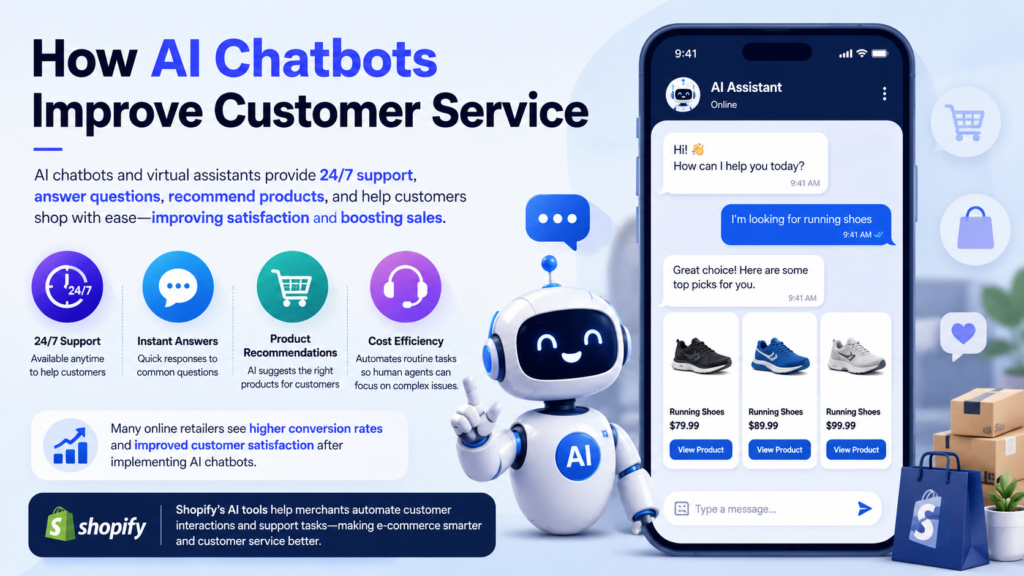
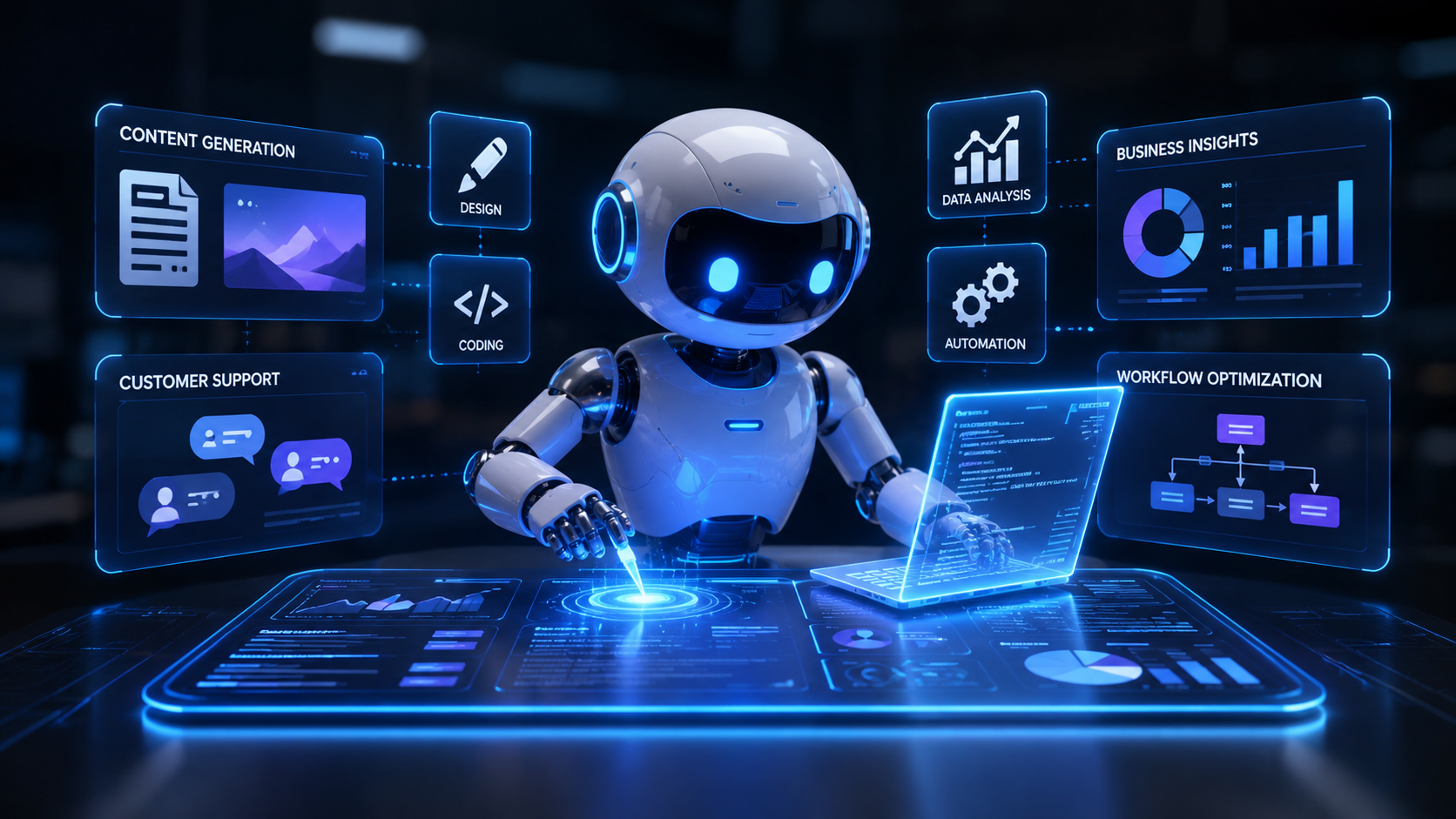
AI chatbots and virtual assistants offer standard customer service around the clock. They help shoppers find products, answer questions, and complete purchases with greater efficiency. These systems answer common questions, resolve ordering issues, and suggest products—all immediately. For routine questions, chatbots can minimize wait times and reduce support costs. This allows human agents to focus on more complicated issues.
Many online retailers have seen better conversion rates. This change occurred after they used AI-powered recommendation algorithms and customer support chatbots.
For example, Shopify’s AI tools are designed to help merchants automate customer interactions and support tasks. Many online stores use AI chat assistants. They answer common questions, recommend products, and help customers during the purchasing process.
Benefits of AI in E-Commerce
Customers receive faster replies, trustworthy information, and a smoother shopping experience, making checkout simpler. Businesses benefit from lower costs, improved first-contact response, and higher customer satisfaction. Chatbots enhance the AI customer experience when linked to CRM and order systems. They offer specific support based on previous purchases. This also helps keep e-commerce automation reliable and effective.
How AI Improves Supply Chain Management
Accurate demand forecasting is one of the biggest advantages of AI-powered inventory management. Machine learning methods are typically applied to historical sales data, seasonal variations, promotions, and external conditions. They predict demand more accurately than rule-based systems. Better forecasts help avoid stockouts and overstocks. This boosts customer satisfaction and frees up working capital.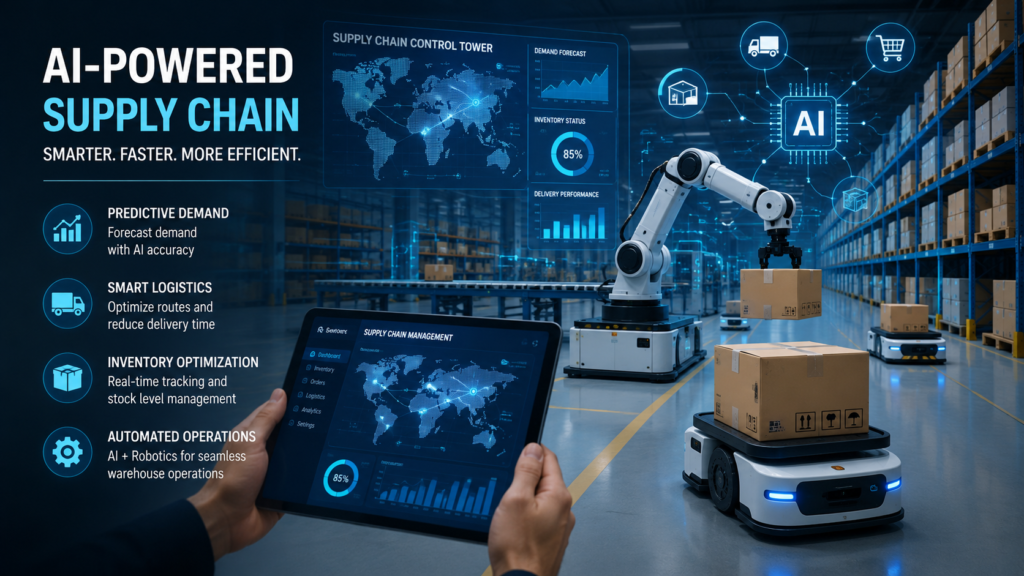
Walmart’s supply chain technology is a great example. They have invested a lot in AI and data analytics. This helps them improve inventory planning and supply chain operations. Advanced planning systems enable retailers to maintain product availability while reducing unnecessary stock levels.
AI also improves inventory management and warehouse efficiency. Robotics and AI help optimize sorting, packing, and shipping processes. This reduces human errors and improves customer satisfaction. Real-time inventory tracking monitors stock across all sales channels—online, in retail locations, and on third-party marketplaces. This supports availability and correctly anticipates overselling.
These improvements cut inventory waste and lower holding costs. They also enable quicker delivery times. This is a major advantage in the fulfillment-driven market of 2026.
AI-Powered Dynamic Pricing
Dynamic pricing uses AI to analyze market trends, competitor prices, inventory, and customer demand. It then adjusts prices automatically. These systems track competitor prices in real time. They suggest the best price points to boost profit or market share.
Automated price adjustments can follow rules, such as maintaining margin thresholds. They can also use reinforcement learning. In this case, AI tests multiple pricing strategies and learns what works best. It helps find the right times for discounts. This way, it boosts earnings rather than cutting into profit margins. Smart pricing boosts revenue while maintaining competitiveness in fast-moving market conditions.
Future Opportunities for AI in E-Commerce Beyond 2026
AI is converging with retail, transforming the way we shop online. New trends will shape our shopping experiences.
Hyper-Personalized Shopping Experiences
AI will create custom storefronts. These will adjust layouts, offers, and content for every visitor. These personalized stories will update in real time. They will adapt based on user intent, lifetime value, and context. This creates tailored shopping experiences that feel like personal service.
AI and Augmented Reality in Online Shopping
The combination of AI and augmented reality (AR) makes shopping easy and engaging. You can virtually try on clothes and makeup. There are also AR tools to place furniture and interactive product examples. These features reduce product uncertainty and boost buyer confidence. They also create immersive shopping experiences that blend physical and digital retail. AI and AR will make the online shopping experience more real and personal than ever.
Conclusion
The role of AI in e-commerce is growing far beyond product recommendations. AI is now a fundamental part of modern online retailing, creating intelligent search results. It streamlines customer support and improves operational efficiency. Businesses that implement these technologies properly will meet customer expectations more effectively.
They’ll also compete with greater success in a data-driven market. Online retailers can utilize AI for product recommendations, chatbots, more accurate stock management, and enhanced pricing. In the future, hyper-personalization and AI-driven AR will mix physical and digital retail. As technology continues to evolve, AI in retail will play a crucial role in the future success of online shopping.