



How Businesses Use Data Analytics to Make Smarter Decisions

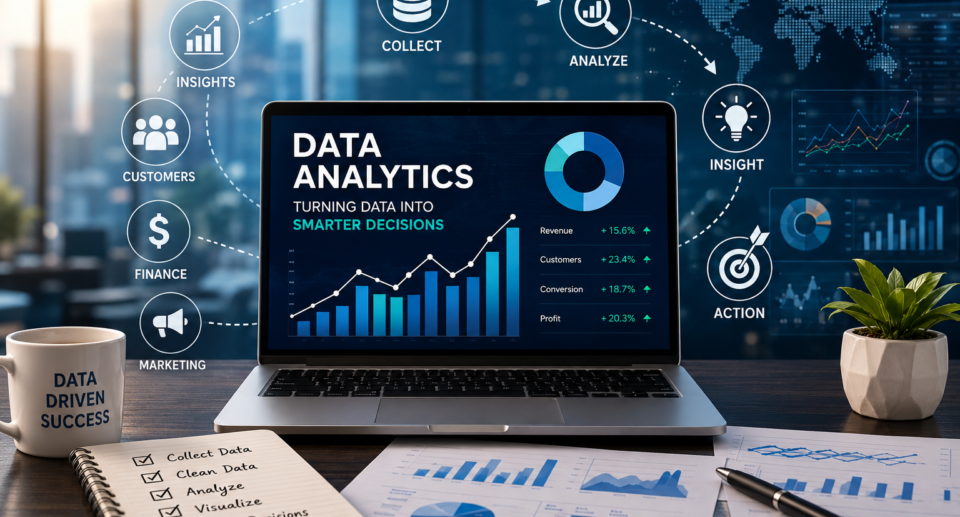
Data analytics is the process of transforming raw data into meaningful observations that guide better business decisions. Various companies are shifting toward data-driven decision-making because advanced tools make it simpler to collect, analyze, and act on information. Traditional decision-making often depended on intuition, experience, or limited information. In other words, it replaces guesswork with measurable facts and trends, enabling faster, more reliable decision-making processes.
This article explains what data analytics is, why it matters for businesses, and how companies apply it across functions, including sales, marketing, and finance. It provides real-world industry examples, outlines common challenges, and offers best practices to maximize the value of analytics. Whether you’re learning about business analytics for the first time or looking to scale an existing analytics system, this guide will help you understand how data-driven business methods lead to smarter, more successful results.
What Is Data Analytics?
In simple terms, data analytics refers to the methods, techniques, and tools used to transform raw data into meaningful information.
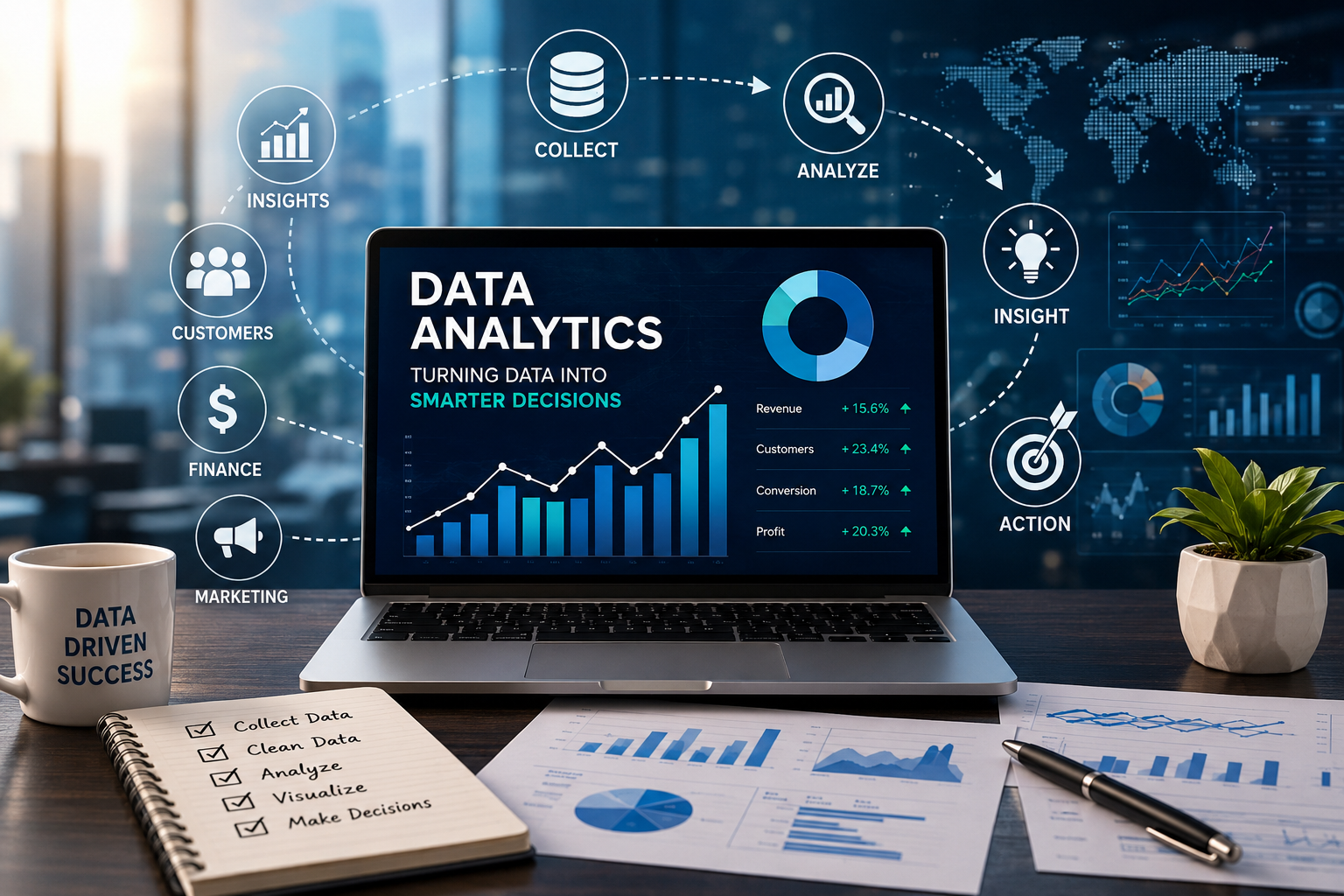
Several common steps are involved in this process:
- Collecting data
- Cleaning and processing it
- Analyzing patterns and associations
- Interpreting and presenting insights
In a business context, this process helps decision-makers understand what is happening, why it is happening, and what is expected to happen in the future.
Businesses collect all important types of data, including sales, customer, marketing, and financial data. Sales analytics can identify which items are selling and where consumer demand is expanding. Customer analytics uncovers buying behavior, preferences, and lifetime value. Marketing analytics evaluates the results of advertising and media channel ROI. Financial analytics tracks income sources, costs, and profitability patterns.
These analyses collectively form a holistic view that supports and guides decision-making, enabling organizations to prioritize investments, optimize operations, and enhance customer experiences. In short, analytical methods transform a small business’s information into the evidence companies need to make better decisions.
Why Data Analytics Matters for Businesses
Data analytics is important because it changes the way organizations make decisions and do business. Key benefits include the following:
- Better Decision-Making: Data-driven decision-making based on facts and measurable trends, not guesswork. This enables executives to manage resources, set product prices, and plan product launches with greater confidence.
- Improved Customer Understanding: Analyzing your customers can reveal behavior patterns and preferences, enabling the delivery of personalized offers, better customer journeys, and improved retention rates. This allows companies to target high-value segments more effectively.
- Higher Efficiency: Operational analytics identifies inefficiencies and bottlenecks, helping businesses improve productivity and operational efficiency. Businesses can optimize supply chains, production, and customer service to reduce lead times and improve cost efficiency.
- Reduced Business Risks: Predictive analytics and anomaly detection help identify small issues early, including dips in product performance and fraudulent payments. Early detection provides for proactive risk mitigation before issues escalate.
These positive aspects explain why business analytics and data-driven business strategies are now essential to growth planning. Organizations that successfully utilize analytics can respond more quickly to market changes, improve customer satisfaction, and boost profits.
Also read this article: How Automation Technology Is Changing Modern Businesses in 2026
How Businesses Use Data Analytics
Companies apply business intelligence across various functions to execute everyday decisions and inform strategic decisions. Below are some common use cases and practical examples.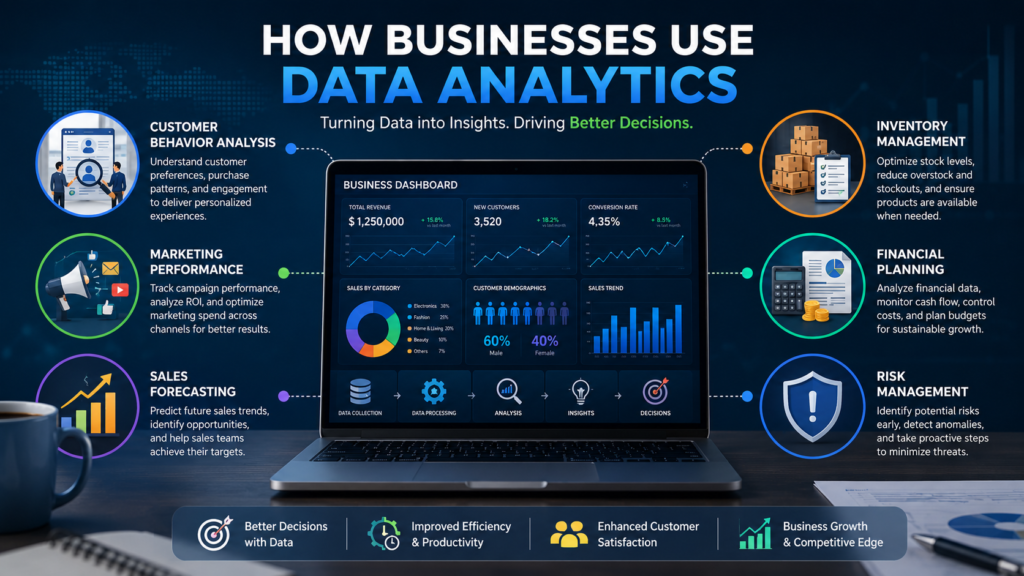
Customer Behavior Analysis
Understanding customer behavior is one of the most common uses of data analytics. Businesses analyze purchase histories, website activity, and engagement signals to understand customer preferences and buying patterns. E-commerce platforms utilize this information to generate personalized product recommendations and targeted promotions, thereby increasing average order value and prompting repeat purchases. For example, online streaming services suggest content based on viewing history, improving engagement and retention.
Marketing Performance
Data analytics allows marketing teams to evaluate the performance of advertising campaigns. Marketing teams analyze key metrics, including click-through rates, conversions, cost per acquisition (CPA), and return on investment (ROI), to measure campaign performance.
Organizations use A/B testing and attribution-based models to identify which campaigns and channels deliver the best returns, reallocating budget to high-performing strategies. Instead of investing equally in all marketing channels, analytics helps organizations focus on the platforms that provide the greatest value. A retail brand may test two email subject lines and use the winning variant to scale a campaign, optimizing ad spend in real time.
Sales Forecasting
Sales analytics uses historical sales data, seasonality, and market indicators to forecast future demand. Industries analyze seasonal trends, customer purchasing patterns, and market conditions to forecast sales more accurately. Accurate forecasting helps sales teams to meet their goals and operations teams to manage stock levels effectively.
For instance, a typical store may use analytics tools to prepare for increased demand during the holiday shopping season. Grocery chains, for instance, forecast seasonal demand to avoid stockouts during the holidays and promotions.
Inventory Management
Inventory analytics model reorder points, lead times, and demand variability to optimize stock levels. Effective inventory management is critical to profitability. It helps businesses determine which products sell quickly and which remain in stock for extended periods.
Predictive inventory systems reduce both overstock and out-of-stock events, lowering carrying costs and improving customer fulfillment. Retailers and wholesalers use these models to strike a balance between working capital and service levels. By maintaining optimal stock levels, companies can reduce storage costs while ensuring that products are available when customers need them.
Financial Planning
Financial analytics examines revenue streams, cost patterns, and profitability by product, region, or channel. CFOs use dashboards to monitor cash flow in near real-time, identify cost overruns, and run scenario modeling that informs budgeting and strategic investment decisions. Startups often rely on financial analytics to prioritize growth initiatives while maintaining a sufficient runway.
These applications show how business data analysis supports both short-term activities and long-term planning. Tools such as BI platforms, predictive analytics models, and visualization dashboards make insights accessible to nontechnical stakeholders, enabling timely and actionable decisions.
Real-World Examples of Data Analytics
Data analytics delivers measurable impact across many industries.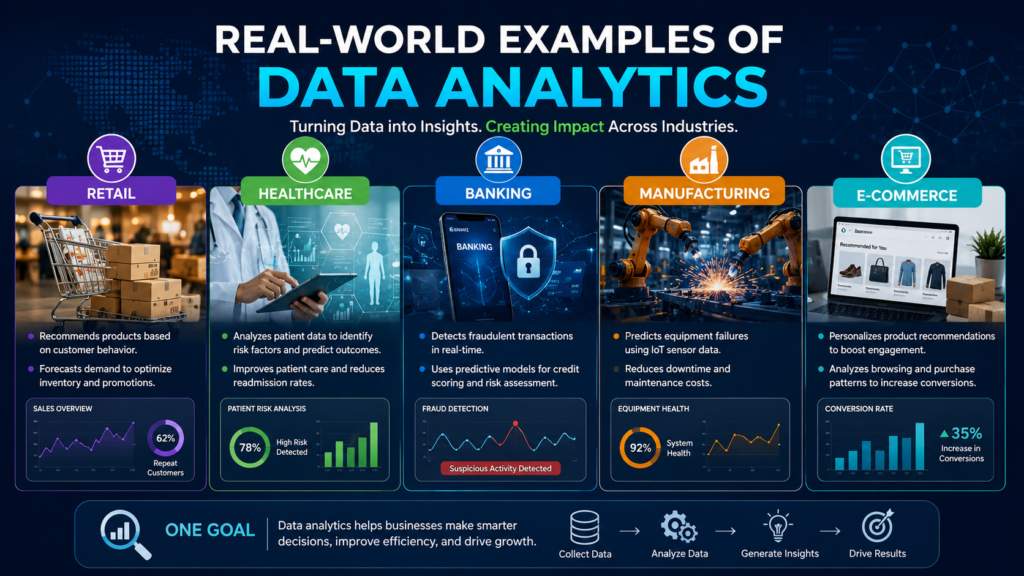
Here are some concrete examples:
Retail
Retailers use product recommendations and customer segmentation to increase sales. Major e-commerce companies use recommendation engines to suggest relevant products based on customer behavior. Demand forecasting allows them to plan for seasonal inventory and optimize promotion times.
Healthcare
Healthcare providers review patient records and health data. They look for risk factors, predict readmissions, and tailor treatment plans. Hospitals use analytics to enhance patient care and minimize preventable complications.
Banking
Banks use transaction analysis and machine learning to detect fraud. They spot unusual behavior in real-time credit scoring models that analyze customer data. They help lenders assess risk more effectively, leading to improved decisions and fewer defaults.
Manufacturing
Manufacturers can use predictive maintenance with IoT sensor data. This helps them predict equipment failures before they occur. As a result, they can reduce downtime and lower maintenance costs. Operational analytics can also improve production scheduling and quality control.
Business analytics and operational analytics show how data can create strategic benefits. They help reduce costs, improve safety, and enhance customer outcomes. Think about an online clothing store. If winter jackets suddenly start selling faster than expected, analytics can alert the business before inventory runs out.
Challenges of Using Data Analytics
Implementing data analysis is not without hurdles:
- Poor-quality data: Incomplete, inconsistent, or inaccurate data produces misleading insights. Strong data governance and cleaning processes are essential.
- Privacy concerns: Collecting and using customer data raises privacy and compliance issues. Businesses must comply with regulations and be transparent about data use.
- High implementation costs: Analytics platforms, infrastructure, and integration can require significant investment, especially for smaller firms.
- Skills shortage: There is a high demand for data scientists, analysts, and engineers. Hiring and upskilling staff takes time and resources.
Addressing these challenges requires planning, governance, and realistic scaling of analytics efforts.
Best Practices for Using Data Analytics
Follow these practices to get the most from analytics initiatives:
- Set clear business goals: Identify specific measurable objectives (e.g., reduce churn by X, increase conversion by Y%) before starting analytics projects.
- Collect accurate data: Standardize data sources, implement validation rules, and invest in data quality and governance.
- Choose the right analytics tools: Select BI, predictive analytics, and visualization tools that match your scale and skills.
- Regularly monitor KPIs: Utilize dashboards to measure progress and spot trends early.
- Revise strategies using insights: View analytics as a cycle. Test your ideas, conduct A/B tests, and adjust your tactics based on what you find.
These steps change analytics from a one-time project into a continuous, valuable capability.
Conclusion
Data analytics has become a crucial component of modern business success. Instead of relying on assumptions, organizations can use accurate data to understand customer behavior, improve operations, identify new opportunities, and make more informed decisions. Whether it’s forecasting sales, optimizing marketing campaigns, managing inventory, or reducing business risks, analytics provides the insights needed to stay competitive in a rapidly changing market.
The key to success isn’t simply collecting large amounts of data—it’s knowing how to turn that information into meaningful action. By setting clear objectives, maintaining high-quality data, and using the right analytical tools, businesses of all sizes can make more informed decisions that support sustainable growth. As technology continues to evolve, companies that embrace data-driven strategies will be better positioned to adapt, innovate, and achieve long-term success.
Frequently Asked Questions (FAQs)
What is data analytics and why is it important for businesses
Data analytics involves collecting, cleaning, analyzing, and visualizing data to gain insights. This process helps create actionable insights. This is important because it uses evidence rather than guesswork. This enhances decision-making, boosts efficiency, and ensures that companies understand and serve their customers.
Can small businesses enjoy data analytics?
Yes. Small businesses can use data analytics to gain a deeper understanding of customer preferences, track sales trends, optimize marketing performance, and manage expenses more effectively. Our many budget-friendly analytics tools let businesses of all sizes leverage data for growth.
What is the difference between data analytics and business intelligence?
Data analytics focuses on examining data to discover patterns, predict outcomes, and support decision-making. Business intelligence (BI) helps organize and visualize past data. It uses reports and dashboards. This way, businesses can easily track performance and check key metrics.
Which industries rely most on data analytics?
Data analytics is widely used across various industries, including retail, healthcare, banking, manufacturing, education, logistics, and e-commerce. Industries use analytics to improve efficiency. They also cut costs, enhance customer experiences, and help make more informed decisions.
How can a company start using data analytics?
A company can begin by identifying clear business goals, collecting reliable data, choosing suitable analytics tools, and tracking relevant key performance indicators (KPIs). Starting with small projects helps businesses build their analytics skills. This way, they can see measurable results as they grow and develop.