





Digital Business Cards for Startups: The Future of Smart Networking

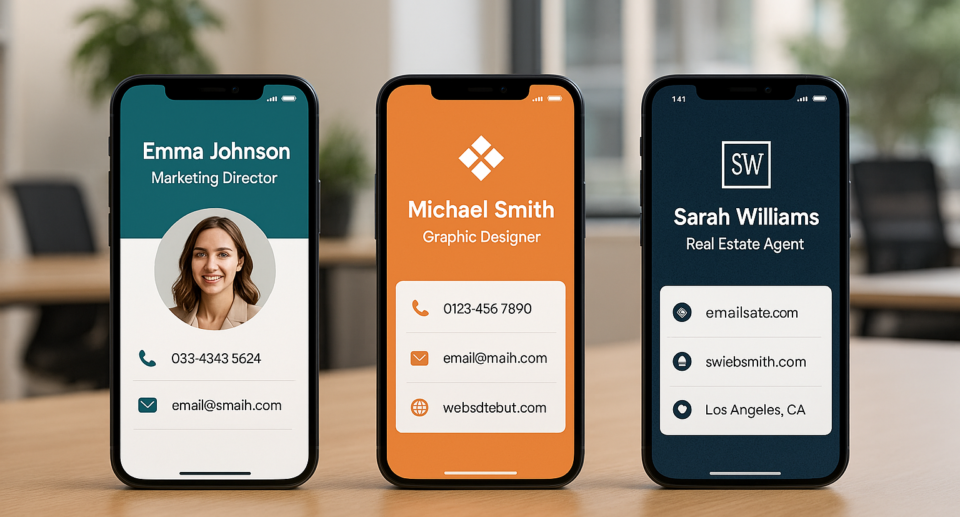
Digital business cards for startups are one of the best ways to network in 2026. Startups can skip printed cards that get lost, go out of date, or cost too much to reprint. Instead, they can use digital business cards. These cards share contact details promptly, enhance branding, and facilitate follow-ups. Modern business networking tools help founders and teams connect on time. They also keep their information up to date and professional.
For growing companies, digital cards are more than a contact-sharing solution. They are strong tools for startup branding. This guide shows why digital business cards are a smart choice for startups, big or small. You’ll find what you need here. Whether you want a free option or want to compare digital and traditional cards, it’s all available.
What Is a Digital Business Card?
A digital business card is a modernized digital form of a traditional business card. It can display your name, title, company, phone number, email address, website, and social media links. You can also add your portfolio, calendar booking, and even video or product demos. it could be share it via QR code, link, NFC tap, text, or email. You can also update it at any time without needing to reprint.
Flexibility is key for growing companies. Team roles, branding, and contact info can change quickly. It works as both a contact-sharing solution and a branding asset. It presents your business in a polished and modern style.
Benefits of Digital Business Cards for Startups
- The biggest advantage is cost. This can save startups money on printing and reordering costs. This is especially helpful when budgets are tight and every expense must support growth.
- Many early-stage startups use digital business cards. This helps them save on printing costs. They can easily update team roles and branding. This means no need to reprint anything.
- Another major advantage is speed. You can share digital cards at events, meetings, or online without delay. This makes networking smoother and less awkward than swapping paper cards. They make follow-up easy. Recipients can save your contact info, visit your website, or book time with you in seconds.
- Digital cards also strengthen brand consistency. A startup can use one design style for founders, employees, and sales teams. This approach makes the business look professional and coordinated. Many platforms provide analytics. This allows you to see who viewed your card and how often. This makes networking easier to track and measure.
Why Startups Use Digital Business Cards
- They reduce printing waste and encourage eco-friendly branding.
- They update in real time, so no one shares outdated information.
- It supports multimedia, such as videos, product demos, and portfolio links.
- They help teams present a cleaner, more modern image at pitches and events.
Best Digital Business Card Tools for Small Businesses
The best tools for small businesses have a few key features. They usually provide simple designs. They have easy sharing options, team management tools, and low prices. Startups should pick platforms with CRM integrations, analytics, and team management. These features matter more as the company grows.
Most digital business card platforms include features such as the following:
- QR code sharing
- NFC support
- Custom branding
- Analytics
- Contact saving
- Integration with scheduling and CRM tools
For startups, the right tool should be easy to set up and scale. A solo founder might need one card. In contrast, a growing company may want team branding, templates, and admin controls. The best platforms help capture leads and follow up. This makes them more valuable than a simple digital profile.
When comparing tools, look for these qualities:
- Customization of logo, colors, and fonts.
- Quickly share via QR code, link, or NFC.
- Analytics for tracking engagement.
- Team management for many users.
- Integrations with calendar, email, and CRM tools.
How to Create a Digital Business Card for Your Startup
Start by figuring out what you want your card to do. Many startups don’t just want to share contact info—they want to drive demos, meetings, and sign-ups. So keep it simple and consistent with your brand. Please include your name, title, company, and contact info. Also, add a call to action like “Book a meeting” or “View our product.” Add your logo, brand colors, and a nice picture of yourself. This way, the card reflects your company’s identity. It won’t just look like a generic contact page.
Then test the shared experience. Scan the QR code, tap the NFC card if you have one, and verify that links open correctly on your mobile device. Create a standard template for your startup. This helps all team members use the same visual style and messaging.
A simple workflow looks like this:
- Choose a platform.
- Add your contact and brand details.
- Include links, calendar access, or demo content.
- Customize the layout.
- Share it through a QR code, link, email, or tap-to-share.
Digital Business Card vs Traditional Business Card
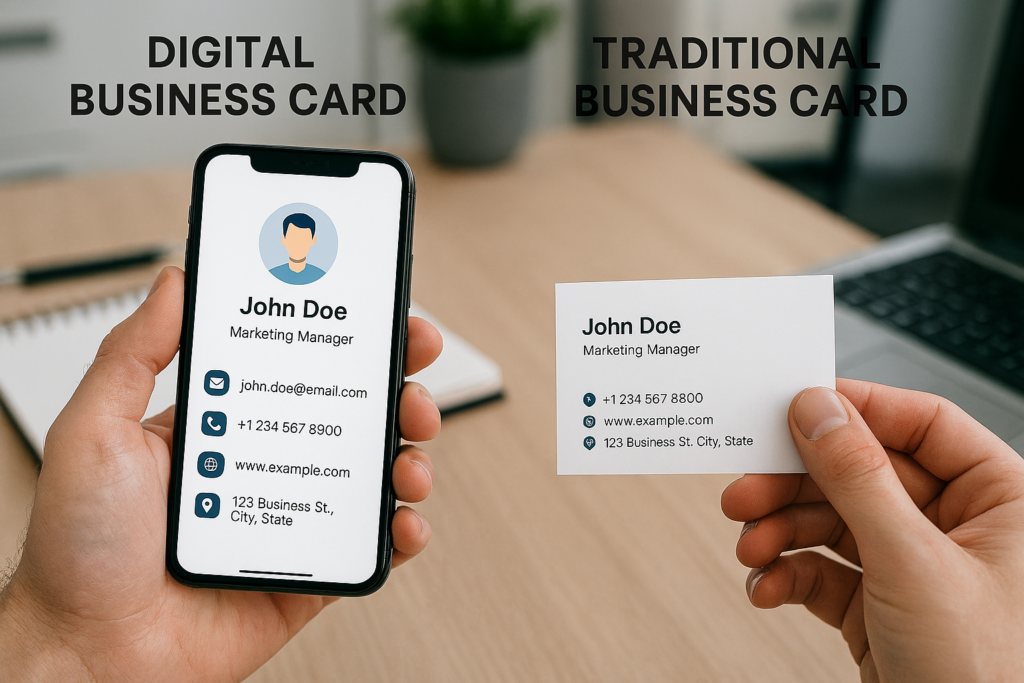
Digital and traditional business cards differ mainly in their flexibility, cost, and functionality. Traditional cards are physical and fixed. They have limited space. Digital cards are interactive and editable. They are also easier to share.
Traditional cards are great for face-to-face events. However, they can get lost, get damaged, or become outdated quickly. Digital cards fix this issue. You can update your info right away, share more content, and track engagement easily. For small businesses, digital cards are often the better long-term choice. They support growth and eliminate the need for repeated printing.
Here is a simple comparison:
| Features | Digital | Traditional |
| Update | Instant | Requires Reprint |
| Sharing | Link, QR, NFC, email | Hand-to-hand only |
| Branding | Interactive and multimedia | Limited Space |
| Tracking | Analytics available | No tracking |
| Cost Over Time | Often Lower | Repeated Printing Costs |
Digital cards are a powerful branding tool for founders. They can showcase product demos, social profiles, and scheduling links all in one spot.
Best Free Digital Business Card Apps of 2026
Many founders begin with free tools. Then they upgrade to advanced plans. These plans include analytics, team management, and CRM integrations.
In 2026, the top free options will strike a balance between ease of use and flexibility for growing companies. Look for apps that allow you to add social links, easily modify your card, and upgrade later if your team expands. Some platforms focus on founders. They provide pitch deck links, demo bookings, and simple lead capture.
When choosing a free app, focus on these points:
- Does it let you remove or cut out the platform branding?
- Can you share it by QR code or link?
- Does it support many contact fields and social links?
- Can you upgrade later for team use?
- Does it look professional on mobile screens?
In 2026, the top digital business card apps are HiHello, Blinq, Popl, Wave, and Mobilo. These tools let founders make professional digital cards. They include features like QR sharing, social links, lead capture, and team branding.
Best Use Cases for Free Plans
- Solo founders testing networking at events.
- Early-stage startups that need a simple contact-sharing setup.
- Teams that want to try out digital cards before rolling out company-wide branding.
- Businesses that want a low-cost entry into modern business networking tools
How Digital Business Cards Work
Digital business cards are online versions of paper cards. They hold your contact details, links, and media on a shareable page or file. Recipients can save your information to their phone or CRM with minimal effort, without typing. Digital cards can use QR codes, shareable links, NFC taps, or formats such as cards and PDFs. They transfer data without delay.
Example of a Typical Workflow:
- Create a card on the platform.
- Customize branding and fields.
- Generate a QR code and a short share link.
At an event, show the QR code on your phone or use an NFC card. The other person scans or taps it. Their browser opens your digital profile. They can then tap “Save contact” or download the vCard. They will add your info to their contacts and set up any CRM lead-capture triggers.
Final Take for Startups
For startups, digital cards are more than a modern replacement for paper. They save money and speed up networking. They support branding and help teams stay flexible as the business grows. A digital business card is a smart choice for 2026. It helps you look professional, share info quickly, and makes follow-ups easier.
Start simple. Keep your branding consistent. Choose a platform that can grow with your team. Your digital business card for startups is a great tool. It helps with networking, sales, and building your brand.
FAQs
Can digital business cards help startups in generating leads at networking events?
Yes, digital business cards can help startups to generate leads at networking events. Add booking links, product demos, social profiles, and CRM integrations. This will help you catch potential clients and follow up fast.
Are digital business cards safe to share business information online?
The best digital business card platforms use encrypted links and privacy controls. This keeps user data safe. Users can also update or remove shared details whenever needed.
Can startups use one digital business card design for their entire team?
Yes, many platforms offer team templates and admin controls for consistent branding. This helps startups maintain a professional image across founders, sales teams, and employees.
Do digital business cards work offline or without an Internet connection?
Some features, like NFC tap sharing or saved cards, may still work without internet. Updated profiles, videos, and external links need a connection to load correctly. This should happen at regular intervals.
What mistakes should startups avoid while developing a digital business card?
Avoid cluttered designs, incorrect links, outdated info, and too many call-to-action buttons. A clear structure with one purpose makes networking simple and more productive.