






Why SaaS SEO Matters More Than Ever in 2026: Strategies for Sustainable Growth

The SaaS industry is developing quickly in 2026. More startups and well-known software vendors are now offering cloud-native tools. This rapid growth has also increased competition. Buyers now have more software options than ever before. To stand out, you need more than a great product. SEO for SaaS companies is one of the most reliable ways to attract qualified prospects at scale. Paid ads give quick visibility, but organic search creates a lasting presence. This is especially important for B2B SaaS companies.
Buyers usually spend more time researching and evaluating solutions before they buy. In this article, you’ll discover what SaaS SEO is and why it’s vital in 2026. You’ll also find practical strategies, including technical SEO for SaaS. Also, learn how AI impacts the field, key mistakes to steer clear of, and tools for measuring success.
The Growing Importance of SaaS SEO in 2026
Every year, the SaaS market gets more competitive. Businesses introduce new items, and consumers’ expectations continue to rise. An effective SaaS SEO plan is essential for long-term growth, greater visibility, and more qualified leads. Businesses that use SEO for SaaS gain a strong advantage over those that rely only on paid ads.
Software buyers now use search engines more than ever. They search for solutions, read reviews, compare features, and check tutorials. This means organic search often kicks off and guides their buying journey. Ranking the right terms affects the pipeline’s quality and volume. So, having genuine, high-quality SaaS content that meets search intent is key. This helps convert interest into demo requests and free trials.
What Makes SaaS SEO Different from Traditional SEO?
SaaS SEO shares principles with traditional SEO. However, it requires a more specialized approach. B2B (Business to Business) SaaS SEO is different from other industries. It deals with longer buying cycles, many decision-makers, and recurring revenue models. This makes strategic content planning and optimization critical for sustainable growth. SaaS purchases usually have longer sales cycles. It can take months of research, trials, and vendor reviews. SEO needs to support many touchpoints over time, not just single landing page visits.
Decisions usually involve teams like managers, tech leads, and procurement. Each team has its own search habits and content needs. SaaS SEO should craft content for both technical and business audiences. SaaS revenue relies on keeping customers loyal and increasing sales to existing clients. So, SEO should focus on users with high lifetime value, not traffic. Target intent-driven keywords to attract the right prospects. Also, create helpful content to support users with the product. Finally, use educational resources and strong onboarding to reduce churn.
Key Reasons SaaS SEO Matters More Than Ever in 2026
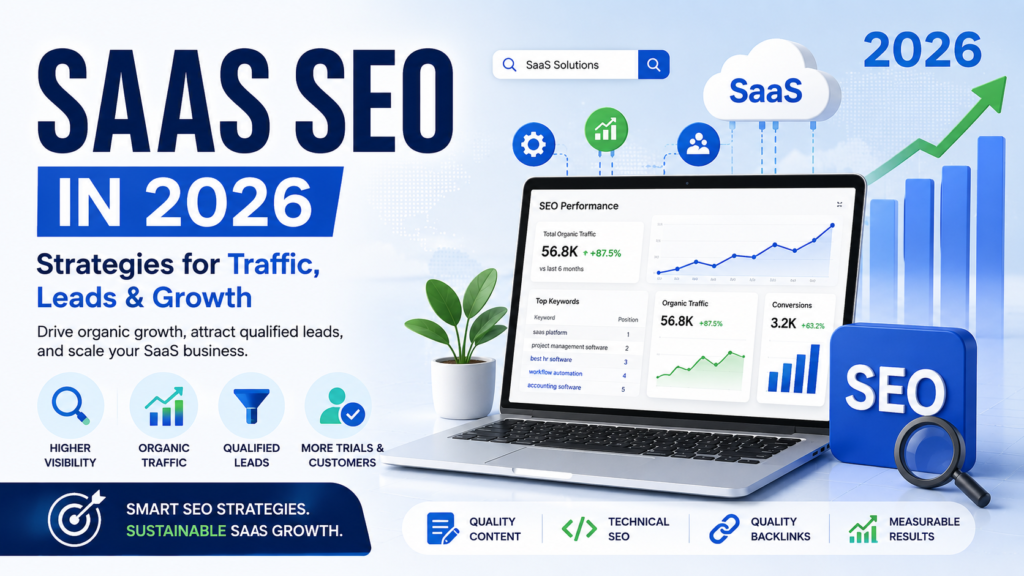
More software buyers are researching products online. So, organic search is now a key driver of customer acquisition. A smart SaaS marketing strategy with SEO boosts brand visibility. It boosts qualified traffic and helps generate leads throughout the customer journey.
Generates Sustainable Organic Traffic: Paid ads stop the moment you pause spending. A solid SaaS SEO strategy creates lasting content and a strong technical base. This approach continues attracting visitors and leads for months or even years. Blog posts, product tutorials, and comparison pages boost traffic. They gain backlinks and build authority over time.
Reduces Customer Acquisition Costs: Over time, organic channels lower customer acquisition costs (CAC). SEO requires an initial investment in content and engineering. However, its long-term cost per lead is usually lower than that of paid channels. This allows companies to allocate more budget toward product development and sales growth.
Builds Brand Authority and Trust: Ranking for relevant terms increases perceived credibility. Using phrases like “best X software” or “compare Y vs Z” links your brand to expertise. This can attract potential customers. Helpful content and solid technical SEO for SaaS pages to boost visibility. This helps turn visitors into trial sign-ups and demo requests.
Supports the Entire Buyer Journey: SEO can and should serve all stages of the buyer journey. A project management SaaS company can share tips to increase team productivity in the awareness stage. Then, it could create comparison pages during the consideration phase. Finally, you may use feature-focused landing pages for the decision stage. A unified SaaS content marketing plan ensures consistent messaging across these stages.
Boosts Lead Generation and Conversions: Targeted organic traffic converts better than generic traffic. This is because it shows a stronger purchase intent.
Creating content that answers questions like “SaaS solutions for onboarding remote teams” or “how to automate payroll for SMEs” attracts qualified leads. These leads are more likely to request demos or start trials. Research shows that B2B buyers conduct extensive online research first. Then, they talk to a sales rep.
Essential SaaS SEO Strategies for 2026
Building a successful SEO campaign requires more than targeting keywords. SaaS content marketing, technical optimization, and user-centered experiences all work together. They boost rankings and draw in high-intent prospects. These strategies help software companies grow lasting SaaS traffic and increase conversion rates.
Map keywords to buyer stages based on search intent:
- Awareness: Focus on problem-related queries.
- Consideration: Use feature and comparison queries.
- Decision: Look at pricing, trial, and demo queries.
Prioritize intent-aligned content to improve conversions. Use search features like People Also Ask to expand topic clusters.
Create High-Quality Content: Invest in depth and usefulness. Users receive support at every stage. This includes long guides, step-by-step tutorials, case studies, and post-purchase reasons. Use visuals, code snippets, and real customer results. These tools help build trust and boost linkability. This is essential for SaaS content marketing. Optimize Product and Feature Pages:
- Make product pages easy to scan
- Clearly show the value
- Include social proof
- Answer common technical and pricing questions
Use a schema for products, FAQs, and reviews. This helps improve SERP visibility and increases click-through rates.
Strengthen Technical SEO:
- Ensure fast page load times
- Make sure the site is mobile-responsive
- Create a crawlable site structure
- Use clean canonical tags
- Optimize your sitemaps
Use server-side rendering or hybrid methods for SaaS services. This is best for those with lots of documentation or content that changes frequently. This helps search engines crawl and index important pages with greater efficiency. Backlinks remain an important signal of trust and authority. Focus on editorial links from industry publications. Also, consider guest posts on relevant blogs and partnerships with community sites. Promote original research, benchmarks, and tools that attract citations through natural engagement. As search algorithms and user behavior change, AI is becoming vital in today’s SaaS SEO strategies.
The Role of AI in SaaS SEO
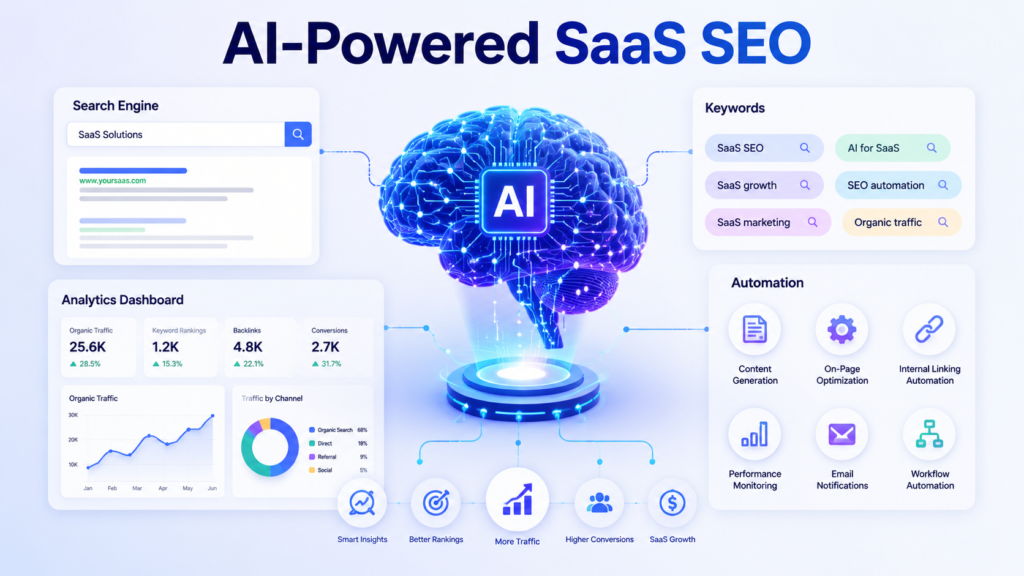
AI is changing the future of SEO. It helps marketers analyze data, spot opportunities, and optimize content faster. AI tools, when paired with proven SaaS SEO best practices, can boost rankings. They also enhance content performance and lead to smarter marketing decisions.
AI tools to speed up topic discovery and content briefs. These tools analyze top-performing pages. AI groups similar keywords and suggests which ones to rank for. This will help boost your topical authority. Machine learning models quickly identify changes in query volume and new user phrases. This gives businesses an early advantage over competitors relying on manual monitoring.
AI can quickly research and draft documents. However, human expertise is crucial for accuracy and understanding. This is especially true in B2B SaaS, where complex features and integrations are key. A SaaS company that provides HR software could use keywords like “employee onboarding software” and “HR automation tools.” This helps it attract the right prospects.
Common SaaS SEO Mistakes to Avoid
Many companies spend a lot on SEO, but they often miss the mark. This happens due to simple mistakes they could easily avoid. Grasping essential search optimization is important. Focusing on relevant keywords and improving content quality is crucial. This can enhance business performance and increase SEO returns.
Chasing high-volume, generic keywords wastes resources. It ignores buyer intent. Prioritize intent-driven, relevant phrases. Bad site speed, crawl issues, and broken structured data can stop pages from ranking. This happens even if the content is high quality. Short, shallow posts fail to please users and search engines. Depth and specificity win for SaaS content marketing. Navigation, weak CTAs, and unclear pricing pages can hurt conversions. This is true even if you have strong traffic. Optimizing for conversions is key. SEO should drive clear actions, like demo requests, trial sign-ups, or lead forms. Track and optimize conversion paths.
How to Measure SaaS SEO Success
Tracking performance is an important part of any SaaS growth strategy. By tracking traffic, rankings, conversions, and leads, businesses can assess their SEO success. This helps them discover methods for ongoing improvement.
Key Performance Metrics
- Organic traffic: overall and by landing page
- Keyword rankings: for target terms across buyer stages
- Demo requests and free trial sign-ups: direct indicators of conversion
- Conversion rates: visitor-to-trial and trial-to-paid
- Customer acquisition cost (CAC): Compare SEO-driven CAC to paid channels
Use Google Analytics for measurement. Also, use Google Search Console for indexing insights. SEMrush (or similar platforms) helps with keyword research, competitive analysis, and backlink audits. For technical monitoring, use tools like Lighthouse, Screaming Frog, or a site crawler. This should be part of your workflow.
Conclusion
In 2026, SaaS SEO is essential. It’s a key growth path for companies seeking lasting expansion and lower costs. With rising competition, buyers now rely more on organic search when choosing software. It’s crucial to mix intent-driven content with technical SEO for SaaS pages. Again, precise measurement is key. AI tools accelerate research and optimization, but human expertise ensures relevance and trust. Investing in SaaS SEO now creates long-term authority. It also ensures a steady flow of leads and strengthens your sales funnel. This supports product-led growth and fosters lasting customer relationships.
FAQS
FAQS
How long does it take for SaaS SEO to produce results?
In three to six months, the majority of SaaS organizations see improvements. You may need to wait six to twelve months for good lead generation and rankings in tough markets.
Is SaaS SEO better than paid advertising?
SaaS SEO and paid advertising have different objectives. Paid advertising generates instant traffic, whereas SEO generates steady, long-term traffic. It also leads to a reduction in the cost of acquiring new clients. Many prosperous SaaS businesses use both strategies.
Which content is most effective for SaaS SEO?
Effective examples include comparative pieces, case studies, product guides, tutorials, and industry insights. Effective content relates to search intent and solves customer problems.
What makes specialized SEO pivotal for SaaS websites?
Technical SEO makes a difference in how the motors, lists, and support get to your site. Speedy loading times, mobile optimization, and well-designed websites increase rankings. Solid Core Web Vitals scores also improve the client experience.
Can AI take the place of human information in SaaS SEO?
No, AI helps with substance arrangement, optimization, and keyword research. Even so, creating precise and quick content needs human skill. This ensures it shows real industry know-how and attracts potential customers.