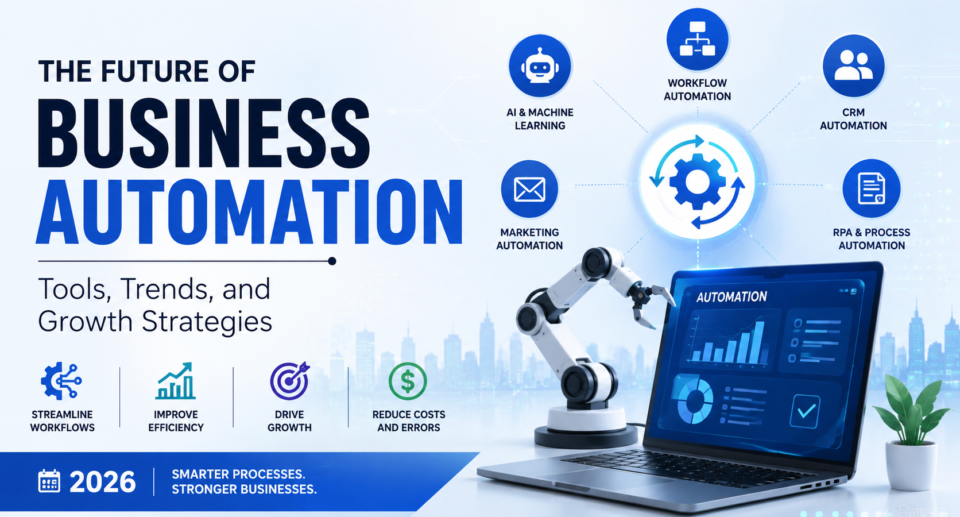







How Information Technology Helps Startups Scale Faster in 2026


In today’s highly competitive business world, information technology is crucial for success. Startups globally depend on technology now more than ever. It helps them optimize operations, boost efficiency, cut costs, and stay competitive. Startups that do succeed often outperform those that use traditional methods. They leverage technology to achieve rapid and efficient scaling.
One of the most important uses of information technology is to automate repetitive tasks. It enables real-time data and facilitates effortless collaboration among teams. This way, organizations can quickly react to marketplace changes. IT solutions offer a scalable platform to support growing companies. These include cloud-based infrastructure and AI-powered analytics. This means businesses can expand and grow without high upfront costs. It drives business innovation, supports the development of new products, and creates opportunities for fast growth.
In this article, we explore how examining information technology can empower startups to scale more quickly in 2026. We’ll explore five critical areas: cloud computing, providing flexible infrastructure; automation, saving time and resources; data analytics, driving smarter decisions; cybersecurity, protecting digital assets; and emerging trends like artificial intelligence and low-code platforms reshaping the startup landscape.
What Is Information Technology for Startups?
Information technology includes the use of computers, software, networks, and digital systems. It helps us to create, process, store, secure, and exchange data. It includes technology that guides businesses to manage information effectively. These vary from simple email systems to advanced enterprise software. For startups, IT plays a significant role in operations and data-driven processes. Modern business models, such as subscription services, e-commerce, and digital marketplaces, rely on robust IT infrastructure.
Technology supports customer relationship management, supply chain operations, and other essential business functions. This enables startups to maximize productivity, even with small teams. Startups require reliable IT solutions to remain competitive. Competitors can quickly copy ideas, but they can’t easily match efficient, tech-driven operations. Strong IT systems support product development, improve customer experiences, and enhance business forecasting. Without reliable technology, startups struggle with manual processes and operational hurdles.
Three key IT components are vital for startups:
| Component | Purpose | Startup Benefits |
| Cloud computing | Remote Infrastructure Access | Eliminates hardware costs, enables remote work, and scales instantly |
| Data analytics | Processing business data | Reveals customer insights, tracks performance, and guides decisions |
| IT Solutions | Integrated Software Systems | Automates workflows, reduces errors, and improves productivity |
These three components form the foundation of a modern startup technology stack. They help businesses run smoothly. They also help make smart choices and grow without major infrastructure problems. Startups that invest in IT early grow 30% faster than those that wait to adopt technology.
How Information Technology Improves Business Operations
Information technology in a startup can efficiently manage daily tasks. It transforms messy manual processes into smooth, efficient systems. One important impact is streamlining business processes. IT performs automated daily tasks, so employees don’t have to enter data into numerous systems. Now, information moves smoothly between different divisions and wherever you would like to send it. When a customer completes a purchase, the order updates the checklist. It also activates billing and notifies shipping—all without needing a manual data transfer.
Enhancing team collaboration is another critical advantage. Modern IT tools, such as shared document platforms and project management software, let teams work together from anywhere. Communication apps also facilitate teamwork more easily and allow people to work on documents together. They can track progress in real time and chat instantly. This eliminates delays from email chains.
Faster communication across departments becomes possible because of the integration of IT systems. When sales, marketing, operations, and finance use connected platforms, information travels instantly. A sales rep can quickly check product status. Marketing can examine customer data at the same time. Finance departments can track revenue without waiting for monthly information. This internet connection significantly reduces manual tasks and human error.
Increased productivity results cumulatively. Startups that utilize full IT systems save approximately 15 to 25 hours per employee per week on routine tasks. This time savings cuts the costs. It can save the team valuable time to focus on key tasks, such as product innovation, rather than routine office work.
IT Solutions for Startup Growth
Not all technology investments deliver the same results. Startups that adopt scalable and flexible IT solutions can grow faster. They can also manage costs better. The following technologies play a major role in supporting sustainable growth.
The correct technology options can help startups expand significantly without significantly increasing expenses. This scalability factor is important for startups growing quickly while maintaining capital efficiency.
Cloud Computing and Flexible Infrastructure
Cloud computing changed access to technological frameworks in businesses. Startups rent computing power from cloud service providers such as AWS, Google Cloud, and Microsoft Azure. This way, they avoid the expenses of purchasing conventional servers and data centers.
Cloud computing has become one of the most valuable technologies for modern startups. They can scale these resources as needed. This means they won’t have to spend a lot on physical infrastructure.
This offers critical advantages:
- Scalable Infrastructure: Startups can quickly and easily grow from 1,000 to 100,000 users. They don’t need new hardware for this
- Reduced costs: Hardware and maintenance costs fall sharply. Big capital expenses turn into regular monthly bills
- Remote access: Teams can access systems from all locations, supporting hybrid and remote work
- Business continuity: Cloud providers offer built-in backup and disaster recovery services.
A SaaS startup decreased traditional infrastructure costs by 60%. They have also boosted performance by migrating to cloud computing. The startup can scale during high-demand periods without overinvesting in new capabilities.
Data Analytics for Smarter Decisions
Data analytics converts basic business data into useful insights, driving growth. Startups using analytics tools can:
- Analyze Customer Behavior: Analytics can identify which features customers use and what drives typical conversions.
- Identify Market Trends: Pattern recognition helps identify emerging opportunities before competitors
- Track Business Performance: Real-time dashboards show income and operational statistics instantly
- Make Data-Driven Decisions: Startups base their choices on real data, indicating what works
A retail startup used data analytics and discovered that 40% of its customers shop on weekends. However, their marketing only ran from Monday to Friday. Since moving advertising campaigns to Saturday and Sunday, response rates have increased. Information processing turns intuition into evidence, reducing costly mistakes.
How Information Technology Drives Automation
Industrialization utilizing IT to support startups saves time, cuts costs, and boosts consistency. Automation can reduce task execution time by 50-80%, according to VL Studio. 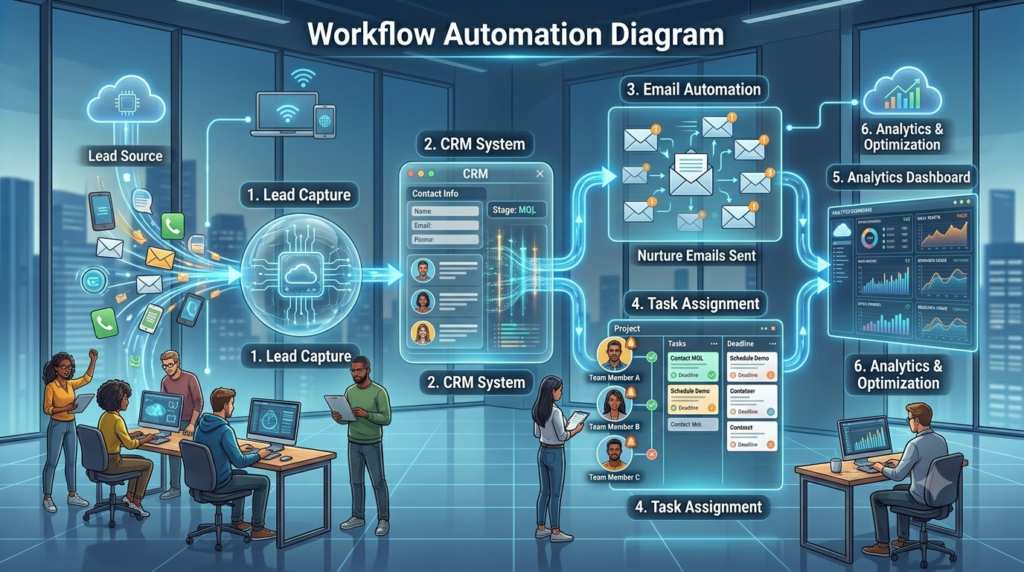
Workflow automation also helps eliminate human error and handles repetitive processes. When a new user signs up, automated workflows take some essential steps. They send welcome emails, create records, assign sales reps, and schedule follow-ups. This all occurs without any laborious manual work. A 50-person SaaS company saved 40 hours each week by using this method. They achieve this by automating lead qualification, onboarding, reporting, and social media management. This amounts to $2,400 in weekly labor-related savings.
Customer support automation uses AI-powered conversational assistants and automated ticket management systems. Chatbots can handle common questions immediately, freeing up human agents to focus on more complex issues. Automated ticketing assigns inquiries to the appropriate team members. New businesses that use support automation reply to customers within 15 minutes, not 2 hours.
Marketing automation streamlines traditional campaigns. Tools automatically segment audiences. They send personalized emails, post on social platforms, and track performance. A startup that automates marketing to boost social engagement. It also cut down on marketing time by 15 hours each week.
Time and cost savings are important in new businesses. Startups typically reduce operational expenses by 20-30% through automation while enhancing output quality and consistency.
Cybersecurity for Growing Businesses
As startups scale, protecting digital support becomes more essential to IT. Cybersecurity breaches can destroy youthful companies through financial loss and reputational damage. 43% of cyberattacks target small businesses, but only 14% are ready to defend themselves.
Data protection and privacy are fundamental responsibilities of any company. Startups should keep customer information and proprietary data secure because of the level of trust. They can perform this by using standard encryption, secure authentication, and implementing regular security updates.
Building customer trust depends laboriously on cybersecurity. Customers won’t share their important data with those companies they don’t trust. Startups that demonstrate strong security techniques develop stronger relationships. One startup improved conversion rates by 28% after prominently displaying its security certifications.
Common cybersecurity issues include phishing attacks, unsecured networks, weak passwords, unpatched software, and insider threats.
Security best practices include multi-factor authentication, endpoint security, regular training, backup systems, and incident response plans. Cybersecurity insurance also protects against potential losses.
Cybersecurity’s role in sustainable business growth is undeniable. Companies with strong security recover from breaches 60% faster. Cybersecurity is an investment in long-term viability, not just a cost.
Top Information Technology Trends for 2026
Technology evolves rapidly, developing new opportunities for startups. Three emerging trends in 2026 are particularly transformative.
Artificial Intelligence and Predictive Analytics
AI helps startups enhance forecasting, decision-making, and customer experiences like never before.
AI helps startups through:
- Forecasting: Predicting sales trends, inventory needs, and cash flow
- Decision-making: Analyzing multiple factors to recommend optimal choices
- Customer experience: Personalizing recommendations and anticipating needs
A fintech startup that uses AI for fraud detection. They reduced false positives by 65% and caught 40% more frauds. AI-powered chatbots handle 70% of routine inquiries without human intervention.
Low-Code and No-Code Platforms
Low-code and no-code platforms accelerate development while reducing costs. These tools enable non-technical members to build applications using visual interfaces, without writing code.
Benefits include:
- Faster development: Applications built in weeks instead of months
- Reduced costs: Development costs drop 40-60%
- Accessibility: Teams build tools without waiting for IT
- Flexibility: Easy modifications without developer dependency
A startup created a custom customer portal in 3 weeks. They used no-code tools, cutting the usual 3-month timeline.
Intelligent Business Systems
Smart business systems combine AI, automation, and analytics into a single platform. This setup boosts efficiency on its own.
These deliver:
- Self-optimizing workflows: Systems adjust processes based on performance data
- Predictive maintenance: Identifying issues before disruptions
- Automated decision support: Recommending actions based on data analysis
How a logistics startup cut delivery times. They achieved this with smart systems for automated route optimization.
Common Information Technology Challenges for Startups
Despite its benefits, implementing technology comes with challenges. Many startups have tight budgets. Many struggle to invest in advanced software, infrastructure, or dedicated IT teams. This leads to compromises that may create future vulnerabilities.
Startups face significant obstacles in implementing technology:
Technology adoption challenges: For instance, employee resistance, confusion over tool selection, and integration difficulties hinder implementation.
Cybersecurity issues: Startups often don’t have dedicated security teams due to limited budgets, leaving them vulnerable.
Skill gap: Finding qualified IT professionals is a costly endeavor. Many startups lack expertise in cloud architecture or data analytics.
Scalability Limitations: Low-cost solutions often miss key features for larger setups. This can lead to expensive migrations down the line.
Building an Effective Information Technology Strategy
Startups that develop long-term technology roadmaps scale more successfully. Choosing the right tools is key. First, check your current needs. Also, consider scalability and how well they can integrate. Also, look at the total cost. Focus on tools that solve many problems. Align IT with business goals. Before making a purchase, ask, “How does this help our objectives?” If a tool doesn’t contribute to revenue or efficiency, it may not be worth the investment.
Plan for future growth: Choose scalable solutions that allow for growth. Consider: “What happens with 10x more users?“
Employee training: Invest in training teams to use IT tools effectively. Untrained employees waste time and fail to leverage capabilities.
Continuous upgrades: Schedule regular reviews of the IT infrastructure and update tools as needed. This prevents costly emergency migrations.
Conclusion
Information technology is the starting point and a very important step for startup growth in 2026. Tech-savvy startups grow faster and compete more effectively. It offers flexible benefits, including cloud computing, which is structured at a lower cost. Automation can save 20-30% on regular operational expenses. Data analytics helps make smarter decisions. Cybersecurity safeguards assets and builds trust.
Investing in scalable and standardized technology solutions early yields additional advantages. Startups that utilize business technology can automate tasks. They access real-time data and respond with flexibility to market changes.
Emerging technology developments, including AI, low-code platforms, and intelligent systems, are changing what is possible. These enable smaller groups of people to achieve what has traditionally required large organizations. Startups that embrace information technology are better prepared for long-term success. Technology isn’t optional—it’s necessary for survival and success in today’s highly competitive business landscape.