




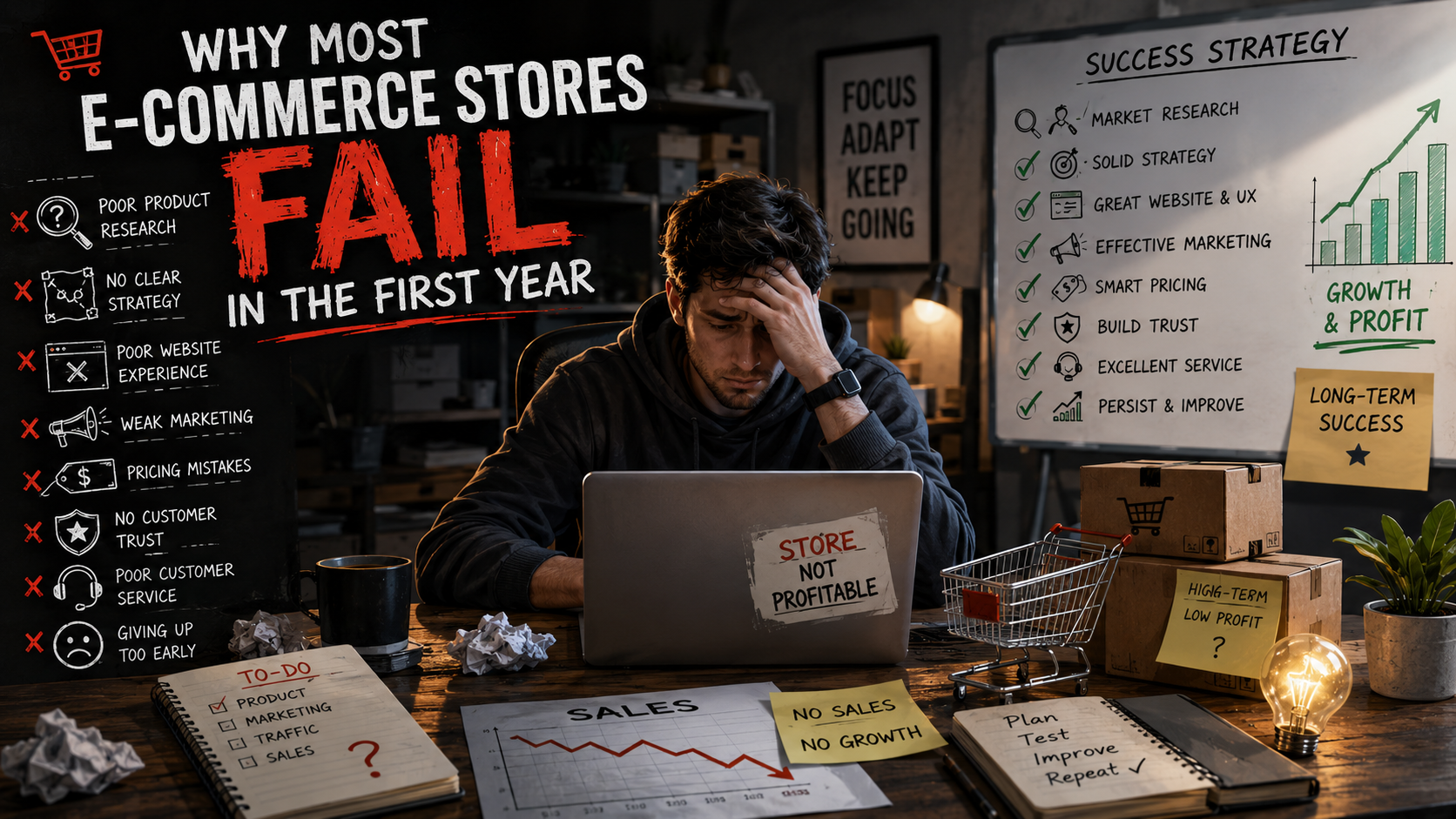

Why Most E-Commerce Stores Fail in the First Year : A Complete Guide

Thousands of e-commerce stores launch each year, though a large share close within their first 12 months. Understanding why e-commerce stores fail can help new entrepreneurs avoid expensive mistakes and establish a successful online business. Some standard reasons include poor product selection, ineffective planning, subpar website user experience, inadequate marketing, pricing errors, and low customer trust. Many new sellers think customers will find their store right away. But this rarely happens. They need consistent marketing and planning to attract buyers.
Running a successful online store requires much more than launching a website. Success depends on thorough product research, strategic planning, effective marketing, competitive pricing, and fostering customer trust. It needs detailed market research, careful planning, steady marketing, and continuous improvement. In this article, you’ll learn the most common reasons why new e-commerce stores fail. I’ll also share some real-world examples to help you avoid the mistakes.
Why Most E-Commerce Stores Fail in the First Year
1. Choosing Products Without Market Research
One major e-commerce product mistake newcomers make is copying products they see on platforms like TikTok and Instagram without checking whether the market is already saturated. This typically occurs without a business plan, a clear audience target, or realistic financial objectives. A common mistake I see is new sellers picking products based on social media trends. They should focus on real customer demand instead. Multiple sellers budget for inventory and often overlook the fact that attracting the first customers requires ongoing testing and marketing expenses.
For example, in 2016–2017, numerous business owners shifted to selling fidget spinners. However, within months, the market quickly became saturated with thousands of sellers, and margins began to collapse.
Sellers sourced low-quality fidget spinners from overseas suppliers, which resulted in poor customer reviews, frequent returns, and razor-thin profit margins. To avoid this, use tools such as Google Trends, Amazon Best Sellers, and niche-specific platforms to confirm market demand. Select a clear, unique selling point. This could be higher-quality, bundled products or targeting a specific audience. Do this before you commit to inventory.
2. Lack of a Proper E-Commerce Strategy
Why do so many online stores fail even before attracting their first customers? One major reason is the lack of a clear business strategy. Startups launch their online stores too quickly without a clear business strategy. This is a significant mistake that businesses make when launching without a well-defined business model, a clear target customer, or a comprehensive financial plan. Some beginners focus solely on creating a website, ignoring important aspects such as branding, shipping, advertising, and targeting a specific audience.
One issue is unrealistic expectations. Most people view e-commerce as a “get-rich-quick” approach and expect immediate profits within a few weeks. In reality, this concept is wrong because building a profitable online store rarely happens overnight.
For example, a small online clothing store launched with only product listings and no marketing budget quickly ran out of cash because initial traffic was near zero and customer acquisition cost (CAC) was higher than expected. View e-commerce as a real business—identify your customer persona, project monthly costs and revenues, establish break-even goals, and manage cash flow. Expect iterative improvements rather than instant success. Gymshark initially relied heavily on influencer marketing rather than traditional advertising, which helped it build a loyal customer base.
A strong online business strategy should include:
- Target Audience
- Financial planning
- Marketing strategy
- Long-term growth plan
- Branding strategy
Store owners who plan carefully are more likely to survive the challenges of the first year.
3. Poor Website Design and User Experience
According to Portent, every additional second of page load time can result in a reduction in conversion rates. That’s why website speed and user experience matter so much and have a significant impact on e-commerce success. Even if you choose the right product, a poorly designed website can still scare away potential customers. An unprofessional or difficult-to-navigate online store causes visitors to leave quickly. New store owners lose customers at checkout because forms are lengthy, shipping costs are only shown late, website speed is slow, or mobile navigation is confusing. Combine keyword research with Google Trends to validate customer demand before selecting a product.
Stores struggle because of:
- Slow-loading pages
- Poor mobile optimization
- Confusing navigation
- Too many popups
- Weak product descriptions
A real-world example: an apparel brand that relocated to a low-cost template saw bounce rates rise because product pages were missing clear sizing charts and high-quality images; sales dropped until they enhanced the user experience and simplified the checkout process. Invest in fast hosting, mobile optimization, clear product pages, and a one-page or streamlined checkout. Customers expect a fast, simple, and trustworthy shopping experience. A complex payment process or messy design can reduce trust and increase bounce rates.
4. Weak Marketing and Lack of Customer Acquisition
Imagine launching a stunning online store. But after weeks, you get only a few visitors. New store owners face this issue. They often underestimate the importance of marketing. Poor marketing is the biggest mistake leading to online business failure. Launching a store alone doesn’t attract customers, and a great store cannot survive without traffic. New owners typically overlook methods such as SEO, social media, email marketing, and proper ad testing.
Standard marketing mistakes include:
- Ignoring SEO
- Not building an email list
- Running ads without testing
- Inconsistent social media marketing
For example, a home décor seller uploaded product photos on Instagram, expecting sales. Without paid ads, influencer deals, or a solid content plan, posts barely reached potential customers.
At the same time, successful stores combine short-term paid ads (tested and optimized) with long-term SEO and email marketing funnels to turn new customers into repeat buyers. SEO builds sustainable organic traffic; social content builds brand awareness; ads need repeated testing and clear tracking of return on ad spend (ROAS).
5. Pricing Mistakes That Kill Profit Margins
Calculate all costs before setting your selling price—not just the product cost. Many new sellers ignore shipping, returns, and transaction fees. Overpricing is a reason e-commerce stores struggle to attract customers. It can deter customers; pricing that is too low can decrease margins and make scaling impossible.
One electronics reseller priced competitively to gain market share but later discovered hidden costs—such as worldwide shipping, returns, and payment-handling fees—leaving it with almost no earnings. Calculate the full landed cost (including product, shipping, fees, and returns) and add a reasonable margin that covers your operating costs and leaves room for profit. Avoid engaging in endless price matching with competitors; instead, differentiate yourself through service, quality, or bundled offers.
In my experience reviewing Shopify stores, I noticed many new businesses invest heavily in inventory before validating demand. Those who tested products with small ad budgets typically reduced losses and discovered profitable products more quickly.
6. Ignoring Trust Signals and Branding
Customers won’t buy from a store they don’t trust, regardless of how attractive the products look. Customer trust is one of the biggest factors behind e-commerce success. New stores appear incomplete or unprofessional, lacking essential details such as reviews, contact information, a returns policy, or SSL badges. Strong e-commerce branding helps businesses appear more trustworthy and memorable. A clean logo and consistent branding helps customers feel at ease when buying from your store.
For example, a small accessory shop with limited product descriptions and no third-party reviews received few orders because buyers worried about security and trustworthiness. Strong branding—consistent visuals, a clear “About” page, visible contact options, and genuine customer reviews—builds trust. Add easy-to-find policies, secure payment icons, and social proof to reduce buyer hesitation. Building customer trust in e-commerce takes time, but it plays a major role in long-term growth.
7. Poor Customer Service
One unanswered customer complaint can lead to negative reviews and, in the future, lost sales. That’s why customer service plays a crucial role in e-commerce success. Poor customer service can quickly damage an online store’s reputation. Slow responses, delayed shipping, and unclear return policies are often the root causes of negative online reviews that appear quickly.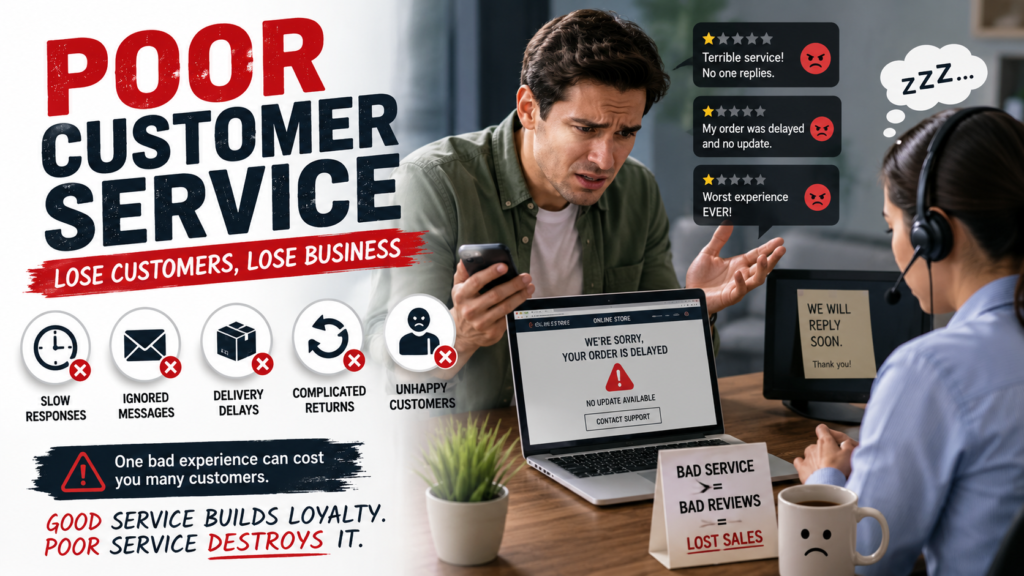
One niche gadget seller experienced a spike in negative reviews after a delivery delay; customer service was slow and templated, which increased complaints and ruined long-term sales.
Stores should provide:
- Fast replies
- Order tracking updates
- Easy return policies
- Professional communication
Good customer service encourages repeat purchases and positive word-of-mouth.
8. Unrealistic Expectations and Giving Up Early
Some sellers expect quick wins and shut down after a few months of low sales. After a few months of slow sales, they become disheartened, lose motivation, and close their stores too early. They forget that a profitable online business’s real growth requires months of testing products, refining ads, improving pages, and listening to customers.
For example, a niche candle brand initially struggled but then doubled sales in six months by improving product photography, adjusting ad targeting, and launching an email welcome series. You must be persistent, test, and continuously learn. Most effective stores don’t start that way; they get there through small, data-driven enhancements over time.
Conclusion
E-commerce isn’t dead; most e-commerce stores fail in their first year because of bad strategic planning. Success includes product-market fit, sound strategic planning, a user-friendly website, consistent marketing efforts, reasonable pricing, effective branding, and reliable customer service. Focus on building long-term value, not short-term gains.
Long-term e-commerce growth is far more likely to succeed if they take the time to change their approach and learn from their mistakes. Store owners who consistently analyze data, enhance the customer experience, and modify their strategies are far more likely to build a profitable and sustainable online business. If your store isn’t getting results today, don’t assume the business model has failed. Improving your product selection, marketing strategy, or customer experience can make a significant difference. Test what works. Focus on creating a business that customers can trust.
Frequently Asked Questions About Why Most E-Commerce Stores Fail in the First Year
Why do most e-commerce stores fail in the first year?
Most e-commerce stores fail due to bad product research, poor business planning, ineffective marketing, pricing mistakes, and a lack of customer trust. Several new store owners underestimate the cost of running a business. Many expect quick profits instead of focusing on long-term growth.
What is the biggest mistake new e-commerce businesses make?
Launching a store without market research or having a clear business strategy is a significant mistake for new e-commerce businesses.
How can I make my e-commerce store successful?
Choose products with proven market demand. Build a fast and reliable website. Invest in SEO and digital marketing. Offer great customer service. Update your store regularly by incorporating customer feedback and analytics.
Does website design affect e-commerce sales?
Yes. A fast, mobile-friendly, and easy-to-navigate website enhances the user experience and improves conversion rates. Slow pages, confusing navigation, and a tricky checkout can cause customers to leave.
How important is marketing for a new e-commerce store?
Marketing is essential for attracting clients and driving sales. A successful e-commerce store utilizes a combination of SEO, social media marketing, email marketing, and paid advertising.